
Free Jig Music Generator Powered by AI
Turn text into high-quality Jig music effortlessly – no login required!

music.toolTips
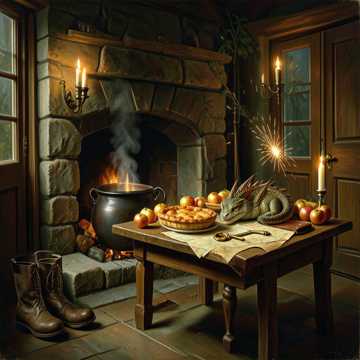
Till the Candles Expire
A band of friends turns a ramshackle quest into a fireside celebration, welcoming a bread-loving dragon and any traveler in need of a seat. Brisk jig rhythms, playful verses and a broad singalong chorus make it a natural fit for fantasy gatherings, tabletop adventures and festive communal scenes.
02:52
Invalid date
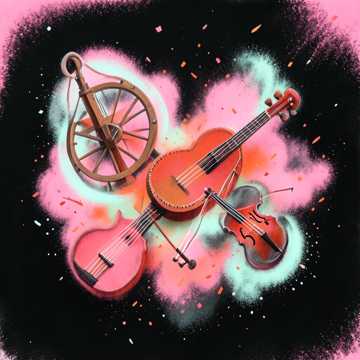
Tavern Reel Rush
A lively instrumental evokes the boisterous warmth of a fantasy tavern, balancing playful camaraderie with a hint of delightful chaos. Bright instrumental exchanges and driving hand percussion make it well suited to game-world celebrations, bustling market scenes or energetic folk dancing.
02:32
2 days ago
Jig Music: Definition, History, Rhythm, and Cultural Development
Jig is a traditional dance-music form known for its lively pulse, repeated melodic phrases, and distinctive compound meters. In the most common Irish jig, the beat is grouped in threes, usually in6/8 time, creating a flowing rhythmic pattern that supports energetic dancing. Jig music is strongly associated with Irish and Scottish traditional music, but related forms also developed in England, France, and the broader European art-music tradition. The word jig is generally connected with older terms referring to dancing, playful movement, or a lively song. In the Renaissance and Baroque periods, the related form known as the gigue became an important instrumental dance movement. Composers such as Johann Sebastian Bach and George Frideric Handel adapted the gigue into suites and chamber works, giving the jig a place in European classical music. In Ireland and Scotland, the jig remained closely connected to community dancing, fiddle playing, flute traditions, pipes, and later Celtic folk ensembles. During the nineteenth and twentieth centuries, Irish and Scottish immigrants helped spread jig music internationally. Recordings, festivals, céilí dancing, folk revivals, films, television, and video games have further popularized the jig sound. Today, the Jig tag can describe traditional dance tunes, Celtic folk recordings, historical dance music, classical gigues, and modern compositions that use a buoyant compound-meter groove.
Jig Music Sub-Tags and Classifications
Irish Double Jig
The Irish double jig is the most widely recognized jig classification. It is normally written in6/8 time, with two groups of three eighth notes in each bar. Its rhythmic foundation is often described as 'ONE-two-three FOUR-five-six,' although skilled musicians vary accents and ornamentation to create lift and momentum. Irish double jigs are commonly played on fiddle, tin whistle, flute, button accordion, concertina, and uilleann pipes. Tunes frequently use two repeated parts, known as the A and B sections, with each section repeated during a dance set.
Irish Single Jig
The single jig is an Irish dance form generally associated with6/8 or12/8 meter, but its melodic rhythm differs from the double jig. It often contains patterns based on a quarter note followed by an eighth note, producing a more grounded and walking quality. Single jigs are used in traditional Irish step dancing and céilí dancing, and their rhythmic character can sound less continuously flowing than a double jig.
Slip Jig
The slip jig is traditionally written in9/8 time, with three groups of three eighth notes per measure. Its extended three-beat grouping creates a graceful, gliding character. Historically, the slip jig was associated with solo dancing, especially in Irish dance traditions. Compared with the more driving6/8 double jig, slip jig music often feels more elegant and spacious while retaining the characteristic triple subdivision of jig rhythm.
Hop Jig
The hop jig is another Irish dance classification, often performed in9/8 time. It shares some rhythmic features with the slip jig but is generally associated with a more emphatic, springing, or hopping dance movement. The distinction between hop jig and slip jig can vary according to regional tradition, historical period, and dance practice. In modern descriptions, the terms may sometimes overlap.
Slide
The slide is a lively Irish dance tune commonly written in12/8 time. It usually has four groups of three eighth notes per measure and is often played faster than a standard double jig. Slides are particularly associated with County Kerry and other southwestern Irish traditions. Their broad, rolling pulse makes them effective for set dancing and gives the music a strong forward motion.
Scottish Jig
Scottish jig music includes several regional and performance traditions, often using6/8 or9/8 meter. Scottish jigs may combine the rhythmic energy of a dance tune with the ornamentation and bowing styles of Highland fiddle music. They are frequently performed on fiddle, accordion, bagpipes, and piano, and may include strong accents, dotted rhythms, and repeated strains designed for social dancing.
English Country-Dance Jig
English jigs appear in country-dance manuscripts and folk traditions from the seventeenth century onward. They can be written in6/8,9/8, or related compound meters and often feature balanced phrases suitable for group dances. English country-dance jigs may sound more measured and contrapuntal than some Irish examples, although both traditions rely on repetition, clear meter, and a direct relationship between music and movement.
Baroque Gigue
The Baroque gigue is the art-music counterpart of the jig tradition. It commonly appears as the final movement of a Baroque dance suite and is characterized by compound meter, quick motion, imitation, and contrapuntal writing. Although it is historically related to the jig, a Baroque gigue is not identical to an Irish or Scottish folk jig. Composers often transformed the dance rhythm into elaborate keyboard, orchestral, or chamber music.
Celtic Folk Jig
Celtic folk jig is a broad modern category that includes Irish, Scottish, Breton, and related traditions. Contemporary Celtic ensembles may combine traditional jig melodies with guitar, bouzouki, bodhrán, bass, percussion, keyboards, and studio production. This classification is useful for music libraries because it identifies the recognizable Celtic atmosphere, acoustic instrumentation, danceable tempo, and compound-meter groove associated with modern jig recordings.
Contemporary and Hybrid Jig
Contemporary jig compositions use the basic jig rhythm while incorporating rock, jazz, electronic, orchestral, cinematic, or world-music elements. Producers may preserve the6/8 or9/8 pulse but add synthesizers, drum programming, sound design, cinematic strings, or unusual harmonic changes. Hybrid jig music is especially suitable for games, fantasy media, animation, travel content, and energetic advertising.
Famous Jig Artists and Classic Jig Works
Turlough O'Carolan
Turlough O'Carolan was an influential Irish harper and composer whose music connects traditional Irish dance practice with the composed art-music style of the Baroque period. His instrumental pieces often combine memorable Irish melodic contours with structured harmonic writing. Although not every O'Carolan composition is a jig, his work helped establish the harp and composed traditional tune as important parts of Irish musical identity.
The Kesh Jig
The Kesh Jig is one of the best-known Irish traditional jigs and is widely performed by sessions, folk groups, and Celtic ensembles. Its appeal comes from a clear6/8 pulse, a memorable melodic contour, and a compact structure that is easy to repeat in a dance set. The tune demonstrates the central strengths of Irish jig writing: rhythmic buoyancy, melodic simplicity, and strong compatibility with ornamentation on fiddle, flute, whistle, and accordion.
The Chieftains
The Chieftains played a major role in bringing Irish traditional music to international audiences. Their recordings frequently combine jigs, reels, hornpipes, slow airs, whistles, uilleann pipes, fiddles, bodhrán, and ensemble arrangements. Their polished performances demonstrate how jig music can retain its traditional rhythmic character while functioning successfully in concert halls, film projects, and crossover recordings.
The Irish Washerwoman
The Irish Washerwoman is a popular traditional jig often performed in Irish and broader Celtic repertoires. Its energetic melody and easily recognizable rhythmic pattern make it suitable for dancing, teaching, parade performance, and beginner instrumental arrangements. The tune illustrates how repeated melodic cells and strong6/8 accents can create an immediately accessible jig without requiring complex harmony.
The Bothy Band
The Bothy Band helped define the powerful, highly ornamented sound of modern Irish traditional music during the1970s. Their arrangements of jigs and reels emphasized tight ensemble playing, rhythmic intensity, and expressive instrumental interaction. The group influenced later Celtic bands by showing that traditional jig music could be energetic, sophisticated, and suitable for a contemporary stage.
Morrison's Jig
Morrison's Jig is a modern Irish traditional standard named after the fiddler James Morrison. It is commonly played as a fast, highly energetic6/8 jig and is especially popular in Irish sessions. The tune's appeal lies in its strong rhythmic propulsion, clear phrase structure, and ability to support expressive ornamentation. Different musicians may alter bowing, rolls, cuts, and accents, giving the same melody distinct regional or personal character.
Planxty
Planxty was a significant Irish folk group associated with musicians such as Christy Moore, Andy Irvine, Dónal Lunny, and Liam O'Flynn. Their music blended traditional Irish tunes with carefully arranged acoustic accompaniment. Their performances helped popularize jig-based set arrangements and demonstrated how traditional dance melodies could be integrated into broader folk-song and concert formats.
The Foxhunter's Jig
The Foxhunter's Jig is a traditional Irish tune with a driving6/8 rhythm and a melody that works effectively in fast instrumental sets. Its repeated strains and strong cadential gestures make it practical for dancing and group performance. The tune demonstrates how Irish jig composers balance repetition with small melodic variations that keep a long performance engaging.
Martin Hayes
Fiddler Martin Hayes is known for a deeply expressive approach to Irish traditional music. His playing demonstrates that a jig does not have to be performed as a purely fast or mechanically dance-oriented tune. Through flexible phrasing, nuanced bowing, and careful attention to melodic shape, Hayes reveals the emotional depth and regional character that can exist within Irish jig music.
Bach's Gigue from the Cello Suite No.1 in G Major, BWV1007
The closing gigue of Bach's Cello Suite No.1 is a classical interpretation of the jig tradition. Rather than functioning as a simple folk dance, it develops its rhythmic energy through flowing arpeggios, sequential patterns, and implied polyphony on a single melodic instrument. The movement shows how a dance rhythm can be transformed into an architecturally organized concert piece while preserving a sense of motion and celebration.
Michael Flatley and Riverdance Ensembles
Michael Flatley and the performing ensembles associated with Riverdance helped introduce Irish dance rhythms to a global popular audience. While Riverdance includes many musical forms beyond jig, its stage productions prominently feature fast Irish dance passages supported by fiddles, whistles, percussion, and orchestral arrangements. These productions strengthened the international association between jig music, Irish dance, and theatrical performance.
Bach's Gigue from the English Suite No.3 in G Minor, BWV808
This keyboard gigue uses imitative counterpoint and fast-moving rhythmic figures to create a dense, animated texture. Its subject is developed across multiple voices, showing the Baroque interest in transforming a dance idea into a rigorous musical argument. The work is an important example of how the gigue classification expanded beyond social dance and became a vehicle for compositional craftsmanship.
Niel Gow
Niel Gow was an important eighteenth-century Scottish fiddler and composer whose repertoire includes many Scottish dance tunes. His music contributed to the development of a distinctive Scottish fiddle style built on strong rhythmic articulation, memorable melodic strains, and dance-oriented phrasing. Gow's legacy remains important in Scottish traditional music and in the performance of historical jig and strathspey-related repertoire.
The Lark in the Clear Air and Traditional Jig Set Arrangements
Many Celtic performers combine well-known airs or songs with traditional jigs in medleys. These arrangements create contrast between lyrical passages and lively dance sections, allowing the jig to function as a climactic or transitional section. Such sets are important in folk performance because they show how jig music can be organized as part of a larger narrative rather than presented as an isolated tune.
Johann Sebastian Bach
Johann Sebastian Bach transformed the related gigue into a sophisticated Baroque form. His gigues use imitation, counterpoint, rhythmic sequencing, and complex harmonic movement. Bach's treatment demonstrates how the basic energy of a jig-like dance could be expanded into serious concert music for keyboard, chamber ensemble, or orchestra.
George Frideric Handel
George Frideric Handel used gigue rhythms in suites, sonatas, and orchestral works. His approach often combines the lively compound meter of the dance with clear melodic gestures and theatrical harmonic contrasts. Handel helped spread the gigue vocabulary throughout European art music and influenced later composers who wanted to evoke movement, celebration, and historical dance.
Application Scenarios for Jig Music
Jig music is effective in film and television scenes involving Ireland, Scotland, village celebrations, historical settings, travel, folk culture, or energetic group activity. A traditional fiddle-and-whistle jig can establish regional identity quickly, while an orchestral jig can add movement to a period drama, fantasy adventure, or dance sequence. Slower instrumentation and lighter arrangement can also provide warmth without overwhelming dialogue.
Film and Television Soundtracks
Jig music is naturally suited to Irish step dancing, Scottish country dancing, céilí dancing, folk choreography, and theatrical productions. Its clearly grouped compound meter helps dancers coordinate footwork and ensemble movement. Live arrangements may emphasize bodhrán, fiddle, accordion, pipes, or percussion to make the rhythmic accents especially clear for performers and audiences.
Dance Performances and Stage Shows
A bright Jig track can communicate energy, friendliness, craftsmanship, travel, heritage, and celebration in advertising. Acoustic jig instrumentation works well for tourism campaigns, food and beverage brands, cultural festivals, outdoor products, family-oriented services, and heritage businesses. Short melodic phrases and a recognizable6/8 pulse allow the music to remain memorable within a brief commercial.
Advertising and Brand Videos
Jig music is frequently suited to fantasy villages, taverns, festive marketplaces, pastoral landscapes, adventure maps, and character-driven scenes. A loopable6/8 jig can create movement without becoming too aggressive, while hybrid versions with strings, percussion, or electronic textures can support action and exploration. The repeated A and B sections of traditional jigs also make them practical for seamless game loops.
Video Game Background Music
Jig music can reinforce the identity of destinations associated with Ireland, Scotland, Celtic heritage, folk festivals, and traditional dance. It can be used in tourism documentaries, destination reels, museum presentations, cultural websites, and travel vlogs. Authentic acoustic instruments are useful when the goal is cultural atmosphere, while modern production can make the music more accessible to online audiences.
Travel, Tourism, and Cultural Content
Baroque gigue music and historically informed jig arrangements can support documentaries, educational content, museum exhibitions, and period dramas. A harpsichord, lute, recorder, chamber ensemble, or historically styled string arrangement can suggest seventeenth- and eighteenth-century European culture. Careful selection is important because an Irish folk jig and a Baroque gigue represent related but distinct traditions.
Historical and Period Projects
The repeating phrases and strong triple subdivision of jig music make it suitable for children's animation, movement exercises, classroom rhythm lessons, and introductory instrumental education. Teachers can use a simple jig to demonstrate compound meter, counting in groups of three, tempo, coordination, and the relationship between music and dance.
Children's Media and Educational Music
Jigs are central to Irish sessions, Scottish traditional gatherings, folk festivals, céilís, and community dances. Their standardized meters and repeated sections allow musicians to join together without extensive rehearsal. In these settings, the Jig tag may cover solo performances, medleys, spontaneous tune changes, and large acoustic ensembles.
Folk Sessions, Festivals, and Community Events
A short Jig intro or background cue can give online content a lively, approachable, and culturally distinctive identity. It works particularly well for cooking, travel, craft, historical storytelling, outdoor adventure, and festival coverage. Because jig melodies are rhythmically clear and often highly recognizable, they can establish tone quickly in short-form video.
Podcasts, Online Videos, and Social Media
Producers can use the jig rhythm as a foundation for folk-rock, Celtic punk, indie pop, cinematic electronica, and dance music. Electric bass, drum kits, synthesizers, distorted guitars, and sampled traditional instruments can preserve the core compound-meter groove while creating a contemporary sound. This approach is useful when a project needs both traditional character and modern commercial energy.
Modern Pop, Rock, and Electronic Fusion