
Free Stage Music Music Generator Powered by AI
Turn text into high-quality Stage Music music effortlessly – no login required!

music.toolTips
1
这是一首无主旋律、为人声充分留白的抒情音乐剧伴奏。钢琴与弦乐从极简铺陈逐步走向明亮饱满,情绪温柔治愈,适合舞台独唱、独白及温情叙事。
03:44
2 days ago
1
以克制钢琴和弦乐铺陈宿命感,由疏至密推向悲剧高潮,再归于静谧;为独唱留白,适合戏剧演绎。
03:25
2 days ago
1
作品以稀疏钢琴和低音长音营造宿命感,逐步叠加弦乐、铜管与轻摇滚节奏,桥段张力爆发后归于静谧;全程弱化器乐旋律,为长线条独唱留出空间。
03:48
2 days ago
1
作品以空灵键盘与低音弦乐开启宿命氛围,经过克制叙事与持续攀升,最终在管弦、铜管和轻摇滚律动中爆发,再回归寂静,呈现完整而悲壮的音乐剧戏剧弧线。
03:55
2 days ago
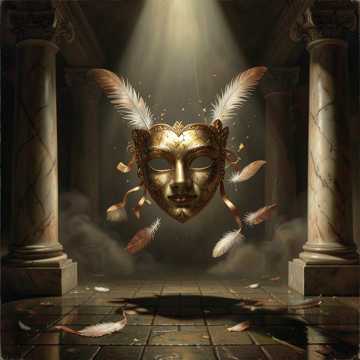
Masquerade Parade
A glossy, stage-lit orchestral overture that begins with introspective piano and low strings, then gathers brass, choir, timpani, harp, and full ensemble force. Its bittersweet masquerade atmosphere transforms shadowy elegance into a noble, triumphant final resolution.
03:17
Invalid date
Stage Music: Definition, History, and Cultural Significance
Stage music is music created, arranged, or performed for theatrical, dramatic, dance, operatic, musical, and other live stage productions. It can function as a complete dramatic work, as in an opera or musical, or as supporting music that establishes atmosphere, introduces characters, underscores dialogue, marks transitions, and intensifies emotional moments. Stage music may include vocal songs, instrumental scores, overtures, interludes, incidental music, dance numbers, choruses, and electronically produced soundscapes. Unlike music intended only for independent listening, Stage music is closely connected to performance, narrative, movement, staging, lighting, and the timing of live action. The origins of Stage music can be traced to ancient Greek drama, where choruses used sung poetry, rhythm, and movement to comment on the action and guide the audience's emotional response. Music also played an important role in Roman theater, medieval mystery plays, religious ceremonies, court entertainment, and traveling dramatic performances. During the Renaissance, the combination of poetry, instrumental music, and staged action developed into early forms of opera and court spectacle. In the seventeenth century, composers such as Claudio Monteverdi helped establish opera as a major Stage music tradition by combining recitative, aria, chorus, and orchestra into a unified dramatic form. The eighteenth and nineteenth centuries expanded Stage music through opera seria, comic opera, grand opera, ballet, melodrama, and incidental theater music. Composers including Wolfgang Amadeus Mozart, Richard Wagner, Giuseppe Verdi, Pyotr Ilyich Tchaikovsky, and Georges Bizet developed stronger relationships between musical themes and dramatic characters. Wagner's concept of the leitmotif, in which recurring musical ideas represent people, objects, or concepts, became especially influential in theatrical and cinematic scoring. During the twentieth century, Stage music broadened through the rise of the modern musical, experimental theater, jazz theater, film-inspired orchestration, popular music, and electronic production. Composers such as Leonard Bernstein, Stephen Sondheim, Andrew Lloyd Webber, Philip Glass, and John Kander demonstrated that Stage music could combine classical composition, jazz, rock, minimalism, folk music, and contemporary sound design. Today, Stage music includes traditional opera and ballet, Broadway and West End musicals, dramatic theater scores, dance music, immersive performance soundtracks, and hybrid productions that combine live musicians with recorded and digital audio.
Stage Music Sub-Tags and Classifications
Musical Theater Music
Musical theater music combines songs, spoken dialogue, choreography, acting, and orchestration to tell a dramatic story. It often includes opening numbers, character songs, duets, ensemble pieces, reprises, dance sequences, and finales. Musical theater Stage music typically uses memorable melodies and carefully structured lyrics to reveal character motivation, advance the plot, and create transitions between scenes. Broadway, West End, regional theater, and contemporary commercial productions all contribute to this classification.
Opera Music
Opera is a highly developed form of Stage music in which drama is expressed primarily through singing and orchestral accompaniment. Common elements include recitative, aria, duet, ensemble, chorus, overture, and orchestral interlude. Opera Stage music may be serious, comic, romantic, historical, or experimental, and its vocal writing often reflects the range and character of different voice types, including soprano, mezzo-soprano, tenor, baritone, and bass.
Ballet Music
Ballet music is written to support choreographed movement, visual storytelling, and physical expression. It must provide clear rhythmic structures for dancers while also creating atmosphere, dramatic contrast, and narrative continuity. Ballet Stage music can range from the romantic orchestral works of the nineteenth century to modern scores using minimalist patterns, jazz, electronics, or unconventional instrumentation. Strong themes, changing meters, and carefully timed climaxes are common features.
Incidental Theater Music
Incidental music is composed or selected to accompany a spoken play without replacing the dialogue. It may appear before the performance, between scenes, during transitions, beneath a monologue, or at the conclusion. Incidental Stage music helps define historical period, location, mood, and character psychology. It can be orchestral, chamber-based, electronic, folk-inspired, or built from environmental sound, depending on the production's artistic direction.
Dramatic Underscore
Dramatic underscore is background Stage music placed beneath dialogue or action to reinforce emotion and narrative tension. It may use sustained strings, repeating piano figures, subtle percussion, drones, thematic fragments, or evolving electronic textures. Effective dramatic underscore remains sensitive to the actors' voices and does not distract from important spoken material. It is particularly useful for psychological drama, suspense, intimate theater, and multimedia performance.
Stage Show and Variety Music
Stage show music supports revue performances, cabaret, variety programs, dance spectacles, circus productions, and live entertainment events. This classification often emphasizes immediate audience engagement, strong rhythmic hooks, dynamic arrangements, and memorable performance moments. Jazz, pop, swing, rock, funk, Latin music, and orchestral show tunes may all appear in a Stage music program.
Choral and Ensemble Stage Music
Choral Stage music uses groups of singers to represent communities, crowds, spiritual forces, political movements, or collective emotional states. The chorus may provide commentary, create a sense of scale, answer soloists, or establish the social world of the drama. Choral writing can be homophonic, contrapuntal, rhythmically percussive, or integrated with orchestral and electronic textures.
Dance and Contemporary Performance Music
Dance and contemporary performance music is created for modern dance, physical theater, performance art, and interdisciplinary stage projects. Instead of following a conventional melody-and-verse structure, it may focus on pulse, texture, silence, repetition, spatial sound, and interaction with movement. Composers frequently combine acoustic instruments, field recordings, modular synthesis, processed voices, and live electronics to create flexible performance environments.
Historical and Period Stage Music
Historical and period Stage music recreates or references the musical styles of a particular era, such as Baroque court music, nineteenth-century romantic orchestration, early twentieth-century jazz, or traditional folk performance. Authentic instruments and historical performance practices may be used, or modern composers may create stylistic adaptations. This classification helps establish setting and supports productions that depend on a strong sense of time and place.
Electronic and Multimedia Stage Music
Electronic and multimedia Stage music uses synthesizers, samplers, digital processing, spatial audio, recorded sound, and interactive systems. It is well suited to immersive theater, projection-based performances, virtual environments, site-specific work, and experimental productions. Electronic Stage music can respond to movement, lighting, audience interaction, or live visual media, making sound an active part of the stage technology rather than a fixed accompaniment.
Famous Stage Music Artists and Classic Works
Claudio Monteverdi
Claudio Monteverdi is widely regarded as one of the foundational composers of opera and early Stage music. His opera L'Orfeo, first performed in1607, helped define the relationship between dramatic storytelling, solo singing, chorus, instrumental color, and orchestral organization. Monteverdi expanded the expressive possibilities of recitative and aria, demonstrating how music could portray character, conflict, and emotional transformation.
L'Orfeo by Claudio Monteverdi
L'Orfeo is one of the earliest masterpieces of opera and a landmark in the history of Stage music. The work combines recitative, arias, choruses, instrumental dances, and orchestral color to tell the myth of Orpheus and Eurydice. Its innovative use of different instruments for contrasting dramatic worlds shows an early understanding of orchestration as a narrative tool. The music moves between celebratory courtly scenes, supernatural spaces, and intimate emotional passages, establishing principles that continue to influence opera and dramatic scoring.
Wolfgang Amadeus Mozart
Mozart transformed opera through sophisticated melodic writing, vivid characterization, and ensemble structures that allow multiple dramatic viewpoints to unfold simultaneously. The Marriage of Figaro, Don Giovanni, and The Magic Flute remain central works in the Stage music repertoire. His contributions include the integration of comic and serious elements, sharply differentiated characters, and finales that build dramatic momentum through increasingly complex vocal combinations.
The Marriage of Figaro by Wolfgang Amadeus Mozart
The Marriage of Figaro demonstrates how Stage music can coordinate multiple characters and simultaneous conflicts within a single ensemble. Mozart uses recurring musical ideas, contrasting vocal registers, rapid exchanges, and expanding finales to clarify relationships while increasing dramatic tension. The score moves fluidly between comic energy and emotional seriousness, making the music an active part of the plot rather than a decorative addition.
Richard Wagner
Richard Wagner reshaped dramatic Stage music through large-scale music dramas, continuous orchestral development, and the use of leitmotifs. In works such as The Ring Cycle and Tristan und Isolde, recurring themes represent characters, objects, ideas, and psychological states. Wagner also expanded the size and color of the orchestra and promoted a unified relationship between poetry, staging, singing, and instrumental music.
The Ring Cycle by Richard Wagner
The Ring Cycle is a monumental series of music dramas that uses leitmotifs to connect musical material with mythology, characters, objects, and philosophical ideas. Wagner's continuous orchestral texture reduces the separation between individual numbers and creates a sustained dramatic flow. Its expanded orchestra, chromatic harmony, and carefully developed thematic network influenced later opera, concert music, film scoring, and the broader language of Stage music.
Pyotr Ilyich Tchaikovsky
Pyotr Ilyich Tchaikovsky made major contributions to ballet and opera through emotionally direct melodies, rich orchestration, and strong dramatic contrasts. Swan Lake, The Nutcracker, Sleeping Beauty, and Eugene Onegin demonstrate his ability to connect musical themes with choreography, atmosphere, character, and narrative. His ballet scores remain among the most influential examples of orchestral Stage music.
Swan Lake by Pyotr Ilyich Tchaikovsky
Swan Lake is a defining ballet score because it combines symphonic development with precise support for choreography and dramatic action. The famous swan theme creates a strong emotional and visual identity, while contrasting dances and orchestral scenes distinguish the supernatural, romantic, and courtly elements of the story. Tchaikovsky's rich harmonies, recurring themes, and detailed orchestration elevated ballet music from functional accompaniment to substantial concert and Stage music.
Giuseppe Verdi
Giuseppe Verdi developed opera into a powerful form of musical drama centered on memorable vocal lines, intense conflict, and clear emotional communication. La Traviata, Rigoletto, Aida, and Otello show his command of solo arias, duets, ensembles, and choruses. Verdi's Stage music balances immediate melodic appeal with carefully shaped dramatic pacing and deep attention to the expressive qualities of the human voice.
West Side Story by Leonard Bernstein
West Side Story innovated by merging Shakespearean romantic conflict with contemporary urban life and by integrating jazz, Latin rhythms, classical technique, and modern dance. Songs such as Maria, America, Somewhere, and Cool serve distinct dramatic purposes, while the orchestration reflects the energy and social divisions of the setting. The score shows how Stage music can communicate character identity, cultural tension, physical movement, and narrative progression at the same time.
Leonard Bernstein
Leonard Bernstein brought classical orchestration, jazz harmony, Latin rhythms, and popular song together in modern musical theater. His score for West Side Story uses dance, syncopation, dissonance, and recurring musical ideas to portray urban conflict, romance, and cultural tension. Bernstein demonstrated that a commercial musical could possess substantial musical complexity while remaining accessible to a broad audience.
Cabaret by John Kander and Fred Ebb
Cabaret uses the nightclub stage as both a setting and a structural device. Many songs function as entertainment for the characters while also commenting ironically on political and social conditions outside the club. The contrast between bright performance styles and increasingly disturbing subject matter creates dramatic tension. Its use of jazz, vaudeville, and cabaret conventions demonstrates how Stage music can reveal a society's contradictions through performance.
Stephen Sondheim
Stephen Sondheim expanded the artistic and dramatic range of musical theater. His works, including Company, Sweeney Todd, Into the Woods, and Sunday in the Park with George, use intricate lyrics, recurring motifs, unusual harmonic progressions, and sophisticated character-driven structures. Sondheim treated songs as dramatic actions rather than interruptions, making Stage music central to psychological development and narrative meaning.
Sweeney Todd by Stephen Sondheim
Sweeney Todd combines musical theater, gothic drama, dark comedy, and operatic ensemble writing. Sondheim uses recurring motifs, complex harmonies, tightly patterned lyrics, and choral textures to create an atmosphere of obsession and social brutality. The score frequently transforms ordinary speech into heightened musical drama, and its musical repetitions mirror the cyclical nature of revenge. This work expanded expectations for the scale and seriousness of Stage music.
Andrew Lloyd Webber
Andrew Lloyd Webber helped define large-scale contemporary musical theater through highly memorable melodies, recurring themes, dramatic orchestration, and visually ambitious productions. The Phantom of the Opera, Cats, Evita, and Jesus Christ Superstar demonstrate his ability to combine rock, pop, classical, and theatrical traditions. His work contributed to the international popularity of modern Stage music and the global musical theater industry.
The Phantom of the Opera by Andrew Lloyd Webber
The Phantom of the Opera is known for its recurring title theme, sweeping orchestration, dramatic vocal writing, and close integration of music with theatrical spectacle. The score alternates between operatic references, romantic ballads, ensemble numbers, and darker dramatic textures. Its leitmotivic organization and memorable melodies help establish character relationships and emotional atmosphere, while its large-scale production style made it a landmark of international musical theater.
Philip Glass
Philip Glass introduced minimalist techniques to opera and contemporary Stage music. Works such as Einstein on the Beach, Akhnaten, and Satyagraha use repeating patterns, gradual harmonic change, additive rhythms, and layered vocal textures. Glass's approach challenges conventional plot-driven opera and creates a more meditative form of musical drama in which repetition and sonic process shape the audience's perception of time.
Einstein on the Beach by Philip Glass and Robert Wilson
Einstein on the Beach challenges conventional theatrical storytelling through repetition, abstract staging, nontraditional text, dance, visual tableaux, and minimalist music. Philip Glass's repeating arpeggios and additive rhythmic structures create a constantly shifting sense of duration, while Robert Wilson's staging treats movement and visual composition as equal partners to sound. The work is an important example of experimental Stage music and multimedia performance.
John Kander and Fred Ebb
Composer John Kander and lyricist Fred Ebb created influential musical theater works such as Cabaret and Chicago. Their Stage music frequently draws on jazz, vaudeville, nightclub performance, and popular entertainment styles to expose the social and political themes beneath the spectacle. Their songs often operate on two levels: as performances within the story and as commentary on the characters and society around them.
Stage Music Application Scenarios
Stage music is used in spoken drama to establish location, historical period, emotional atmosphere, and transitions between scenes. A composer may create short themes for central characters, tense underscoring for confrontations, or transitional music that maintains momentum while the set changes. In realistic theater, subtle textures may support dialogue, while stylized productions may use music as an independent dramatic narrator.
Theater Productions
Musical theater depends on Stage music to advance the story through songs, reprises, ensemble numbers, dance sequences, and orchestral transitions. Music can introduce a character's desire, reveal a change in perspective, summarize a period of time, or bring several plot lines together in a finale. The arrangement must also support singers, choreography, microphones, scene changes, and the acoustics of the venue.
Musicals and Broadway-Style Shows
In opera, Stage music carries much of the narrative through arias, recitative, duets, ensembles, and choruses. It can communicate emotional states that are difficult to express through ordinary speech and can distinguish social roles through vocal type and orchestral color. Opera productions also use overtures and interludes to prepare the audience for the dramatic world before the singers appear.
Opera and Classical Vocal Performance
Ballet Stage music provides the pulse, phrasing, mood, and dramatic structure needed for choreography. Composers may write specific rhythmic patterns for movement, create contrasting sections for different characters, or build orchestral climaxes that correspond to major physical gestures. Contemporary dance productions often use electronic loops, sampled sound, silence, and spatial audio to create less predictable movement environments.
Ballet and Dance Performances
Stage music techniques are frequently adapted for film and television, especially through leitmotifs, character themes, dramatic underscoring, and orchestral transitions. A recurring theme can identify a character or idea, while changes in instrumentation can reflect development across a story. Musical theater songs may also be adapted into screen productions, where the music helps preserve the structure and emotional identity of the original stage work.
Film and Television Soundtracks
Stage music can be used in live brand launches, fashion shows, award ceremonies, corporate events, and promotional spectacles. Carefully timed musical cues help coordinate entrances, lighting, video projections, product reveals, and audience reactions. Short, memorable themes can strengthen brand identity, while larger orchestral or electronic arrangements can create a sense of scale and occasion.
Advertising and Brand Events
Stage music ideas are useful in games that feature character entrances, boss encounters, cutscenes, theatrical worlds, or live performance settings. Leitmotifs can represent characters and factions, while adaptive music can change as the player's actions alter the scene. Musical theater and opera-inspired games may use songs to deliver story information, develop relationships, or make important moments feel ceremonial and memorable.
Video Games and Interactive Media
Circus performances, magic shows, variety programs, and large live entertainment events use Stage music to establish tempo and coordinate performers. Strong rhythmic cues can support acrobatics and choreography, while dramatic rises and pauses can emphasize reveals, stunts, and visual transitions. Music is often synchronized with lighting, pyrotechnics, video walls, and movement across a large performance space.
Circus, Variety, and Live Entertainment
Immersive Stage music is designed for environments in which audiences move through spaces or interact with performers. Spatial speakers, hidden sound sources, environmental recordings, live musicians, and responsive electronics can make the audience feel located inside the dramatic world. The music may change according to audience position, performer movement, or the progression of a route through the venue.
Immersive and Site-Specific Theater
Stage music can add narrative structure to museum exhibits, historical presentations, and interactive cultural installations. A sound score may guide visitors through different sections, create an emotional connection to artifacts, or reconstruct the atmosphere of a historical event. Loop-based composition and carefully controlled volume are especially important when visitors can enter and leave the experience at different times.
Museums, Exhibitions, and Cultural Installations
Schools, community theaters, youth ensembles, and cultural organizations use Stage music to support storytelling, collaboration, and public performance. Songs and ensemble arrangements can make historical subjects, literature, social issues, and local traditions more accessible. The music may be adapted to available performers and instruments, allowing participants with different experience levels to contribute to a shared production.
Educational and Community Performances
Stage music is commonly used for opening ceremonies, commemorations, festivals, parades, award presentations, and civic events. Processional music establishes order and occasion, fanfares signal important moments, and thematic arrangements create a shared emotional experience. In these settings, the score must be clear in large spaces and timed accurately with speeches, entrances, visual media, and ceremonial actions.
Ceremonies and Public Events