
Free Unfinished Love Music Generator Powered by AI
Turn text into high-quality Unfinished Love music effortlessly – no login required!

music.toolTips

Your Coat on the Chair
A narrator reunites with someone they once left, discovering that familiar silence, small gestures, and lingering affection have survived every excuse. The song builds from guarded intimacy into a forceful confession: despite claiming to have changed, the narrator is still drawn back.
03:26
Invalid date

अधूरा रह गया इश्क़
यह गीत उस प्रेम की पीड़ा बयान करता है जिसकी कहानी पूरी थी, मगर साथ अधूरा रह गया। धीमी मम्बल गायकी, भावुक रैप, उदास पियानो, गिटार और बारिश भरा वातावरण टूटे रिश्ते, पछतावे और अनकहे दर्द को गहराई देते हैं।
04:27
3 days ago
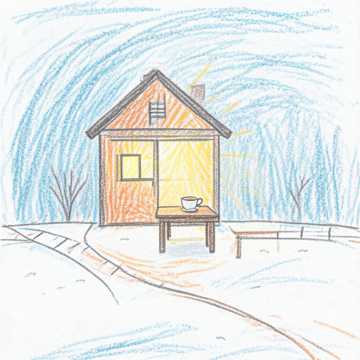
Место у окна
Интимная история человека, который спустя годы возвращается к дому любимой. Сквозь февральский холод, тишину и несказанные слова песня раскрывает надежду на прощение, внутреннее примирение и возможность оставить дверь открытой до утра.
02:31
3 days ago
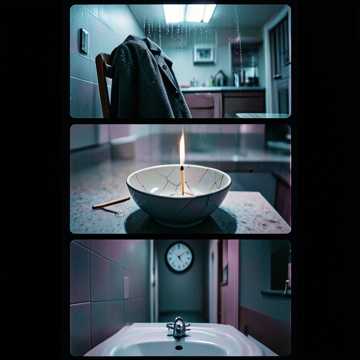
Pull Me Under
Pull Me Under portrays a turbulent bond that refuses to disappear. Through intimate domestic images and wave-like metaphors, the narrator moves between longing, surrender, and awakening, while the dark electro-pop R&B production mirrors the relationship through tense verses, rising synths, explosive choruses, and a final emotional release.
03:33
4 days ago

We Said Goodnight
A bright, emotional electronic track about two people who part with a goodnight instead of goodbye. Through glowing messages, lingering memories, and missed calls, the song balances romantic regret with hopeful persistence, carried by a catchy chorus, neon synths, rhythmic production, and melodic future-bass energy.
03:00
5 days ago
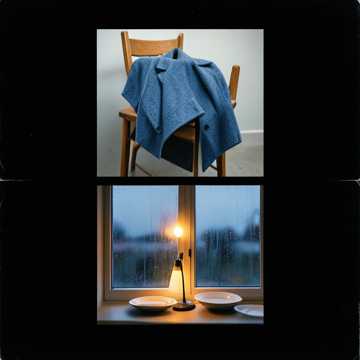
The Words We Left Undone
A quietly cinematic song about someone waiting for a loved one who may still return. Everyday objects become symbols of absence, while an open window, a lamp, and two untouched places preserve hope for unfinished words and emotional reconciliation.
02:50
5 days ago

Cangkir yang Retak
Lagu ini menggambarkan cinta lama melalui simbol cangkir retak: tidak sempurna, tetapi masih menyimpan kehangatan. Dengan nuansa reflektif, kisah perpisahan berkembang menjadi penerimaan, rasa syukur, dan harapan bagi hati yang pernah kehilangan rumah.
04:09
6 days ago
Unfinished Love: Definition and History
Unfinished Love is a thematic music tag describing songs and instrumental compositions centered on unresolved romance, separation, missed opportunities, unspoken feelings, broken relationships, or emotional attachment that has not reached a clear conclusion. Unlike a formal genre such as jazz, rock, or classical music, Unfinished Love is a mood- and narrative-based classification that can appear in pop, R&B, soul, blues, folk, country, indie, cinematic music, and electronic music. Typical emotional qualities include longing, regret, nostalgia, vulnerability, uncertainty, heartbreak, and hope for reconciliation. The musical language of Unfinished Love has deep roots in ancient lament traditions, folk ballads, religious songs, and courtly love poetry, where singers often described love that was forbidden, distant, or impossible to fulfill. During the development of the blues and soul traditions, unresolved love became closely associated with expressive vocals, repeated harmonic patterns, and lyrics about abandonment and emotional endurance. In the twentieth century, torch songs, country ballads, rock love songs, and singer-songwriter compositions expanded the subject through intimate storytelling. Contemporary Unfinished Love music continues to develop through minimalist piano arrangements, atmospheric production, diary-like lyrics, alternative R&B, bedroom pop, and film-score techniques. Today, the Unfinished Love tag is commonly used to group music that captures the emotional space between attachment and closure, making it especially useful for heartbreak playlists, reflective listening, romantic drama soundtracks, and emotional background music.
Unfinished Love Sub-Tags and Classifications
Unrequited Love
This Unfinished Love classification focuses on feelings that are not returned or cannot be openly expressed. The music often uses restrained verses, delicate piano or guitar, spacious arrangements, and lyrics that emphasize emotional distance. The central tension comes from one person continuing to love while receiving little or no confirmation from the other person. Unrequited love songs are effective because they create a strong sense of vulnerability and personal identification.
Love After Separation
Love After Separation describes music about former partners who remain emotionally connected after a breakup, divorce, relocation, or other form of distance. These songs frequently combine melancholy with warm memories, using slow tempos, minor-key harmonies, acoustic instruments, and reflective vocal performances. The relationship has ended in practical terms, but the emotional story remains unfinished, which is one of the defining characteristics of Unfinished Love music.
Missed Timing and Lost Opportunity
This sub-tag covers songs about people who might have been together if circumstances, timing, fear, or misunderstanding had been different. Lyrics often refer to paths not taken, words left unsaid, or a relationship that ended before it could fully begin. Musically, this category may use gradually building arrangements, suspended chords, repeated motifs, and delayed resolution to mirror the feeling of an incomplete romantic narrative.
Forbidden or Impossible Love
Forbidden or Impossible Love includes music about relationships blocked by family expectations, social rules, geography, personal obligations, incompatible identities, or other external forces. These works often have a dramatic and cinematic quality, with sweeping strings, emotionally intense melodies, or powerful vocal climaxes. The appeal of this Unfinished Love classification comes from the conflict between strong emotion and an unattainable outcome.
Hopeful Reconciliation
Hopeful Reconciliation represents a more optimistic form of Unfinished Love. The relationship may be damaged or suspended, but the music leaves room for forgiveness, reunion, or emotional healing. Compared with purely tragic heartbreak songs, these works often use brighter harmonies, gradual rhythmic growth, major-key transitions, and uplifting final sections. The unresolved ending becomes a possibility rather than an absolute loss.
Nostalgic and Memory-Based Love
This category centers on memories of a past relationship, including old places, photographs, familiar melodies, seasons, and everyday objects associated with a former partner. Nostalgic Unfinished Love music may sound gentle rather than dramatic, using lo-fi textures, acoustic guitar, soft piano, tape effects, or understated vocals. Its emotional power comes from preserving the past while recognizing that the relationship cannot return in exactly the same form.
Instrumental Unfinished Love
Instrumental Unfinished Love music communicates unresolved romance without lyrics. Piano, strings, guitar, ambient pads, and cinematic percussion can suggest longing, hesitation, farewell, or emotional release through melody and harmony alone. Composers often avoid a complete cadential resolution, repeat a central theme with subtle changes, or end with an open chord to reinforce the idea that the love story remains incomplete.
Famous Artists and Works Related to Unfinished Love
Adele
Adele is strongly associated with emotionally direct songs about separation, regret, memory, and the difficulty of moving on. Her representative work "Someone Like You" presents the perspective of a former partner who has not fully released the past. Through a restrained piano arrangement, conversational verses, and an expansive vocal delivery, Adele helped bring the Unfinished Love theme to a global pop audience. Her work demonstrates how simple harmony and precise emotional phrasing can create a powerful sense of unresolved intimacy.
Someone Like You - Adele
This song builds its emotional impact from a repeating piano pattern and a relatively simple harmonic framework. The lyrics describe the painful encounter between personal memory and the knowledge that a former partner has moved on. Its innovation is not based on complex production but on emotional clarity: the arrangement leaves substantial space around the voice, allowing every pause and vocal rise to communicate hesitation and grief. The song represents Unfinished Love through its refusal to offer a fully comforting resolution; the narrator wishes the former partner well while still revealing that the relationship remains emotionally active.
Jeff Buckley
Jeff Buckley explored romantic uncertainty, emotional dependence, and complicated intimacy through highly expressive vocals and fluid guitar arrangements. "Lover, You Should've Come Over" is a key example of Unfinished Love because it combines desire, regret, self-awareness, and the recognition that a relationship may be impossible to repair. Buckley's contribution lies in his ability to merge alternative rock, soul, folk, and poetic songwriting into a fragile and emotionally unpredictable form.
Lover, You Should've Come Over - Jeff Buckley
Jeff Buckley's composition combines folk-like storytelling, blues phrasing, alternative rock dynamics, and unusually expressive vocal ornamentation. The song presents love as both deeply desired and difficult to sustain, with shifting emotional perspectives that move from longing to frustration and resignation. Its arrangement grows and contracts rather than following a rigid pop pattern, creating the feeling of an unstable inner monologue. This fluid structure is especially suitable for the Unfinished Love tag because the music itself seems unable to settle into a final emotional position.
Sam Smith
Sam Smith has made unresolved romance a recurring subject in contemporary pop and soul. Songs such as "Too Good at Goodbyes" and "Stay with Me" examine emotional dependence, temporary intimacy, rejection, and the fear of being left alone. Smith's contribution to Unfinished Love music includes the use of gospel-inspired backing vocals, spacious production, dramatic vocal peaks, and highly accessible lyrics that translate private heartbreak into large-scale pop emotion.
I Can't Make You Love Me - Bonnie Raitt
Built around a slow piano-led arrangement, this song portrays the moment when one person recognizes that love cannot be demanded or negotiated. The performance avoids excessive melodrama and instead uses controlled phrasing, spacious instrumentation, and gradual emotional intensification. Its central innovation is its mature treatment of heartbreak: the narrator does not simply accuse the other person but accepts the painful limits of personal control. It is a defining Unfinished Love work because the ending provides emotional recognition rather than romantic closure.
The Beatles
The Beatles expanded the language of romantic songwriting by presenting love through multiple emotional perspectives, including doubt, absence, regret, and psychological conflict. "For No One" is particularly relevant to the Unfinished Love tag because it depicts a relationship that has emotionally ended for one person while the other struggles to understand the loss. The band's contribution includes sophisticated harmonic movement, concise narrative writing, and the integration of classical-influenced instrumentation into popular music.
Nothing Compares2 U - Sinead O'Connor
The song transforms post-breakup loneliness into a direct and highly personal vocal statement. Its arrangement is comparatively restrained, with a steady rhythmic foundation and prominent melodic space that keeps the focus on the singer's emotional delivery. O'Connor's performance uses changes in breath, intensity, and vocal texture to make absence feel physical. The song's influence comes from its ability to turn a broadly recognizable breakup theme into an intimate confession, making it a lasting reference point for Unfinished Love playlists and emotional pop music.
Radiohead
Radiohead frequently connects romantic disconnection with alienation, anxiety, and modern emotional uncertainty. "True Love Waits" is widely regarded as an important example of a song about devotion that cannot achieve stable resolution. Its sparse arrangement and repeated lyrical plea create an atmosphere of suspended emotion. Radiohead's contribution to Unfinished Love is the transformation of romantic longing into an experimental, atmospheric, and psychologically complex sound.
True Love Waits - Radiohead
This work uses repetition, minimalism, and unresolved atmosphere to express devotion under conditions of uncertainty. Rather than presenting a conventional narrative with a clear beginning and ending, it creates the impression of a thought or plea that keeps returning. Sparse instrumentation and open sonic space make the emotional subject feel isolated and suspended. Its importance to Unfinished Love lies in the way it merges romantic attachment with anxiety, impermanence, and the fear that love may not be enough to prevent separation.
Sinead O'Connor
Sinead O'Connor's performance of "Nothing Compares2 U" became one of the most recognizable expressions of grief after a relationship has ended. Her vocal delivery moves between restraint and emotional rupture, while the uncluttered arrangement keeps attention on the pain of absence. O'Connor's contribution demonstrates how interpretation, silence, and vocal vulnerability can be as important as songwriting structure in Unfinished Love music.
For No One - The Beatles
The Beatles portray the quiet collapse of a relationship through concise lyrics and carefully arranged instrumental color. Instead of using a dramatic breakup scene, the song focuses on ordinary moments in which one partner realizes that the other person's feelings have disappeared. The restrained vocal style and distinctive horn-like melodic line create emotional distance, while the compact structure reflects the finality of an ending that has not been equally understood by both people. It is an important Unfinished Love example because its sadness comes from emotional asymmetry rather than open conflict.
Bonnie Raitt
Bonnie Raitt is closely connected with blues, roots, and adult contemporary songs about regret, emotional distance, and the desire to repair damaged relationships. Her performance of "I Can't Make You Love Me" presents heartbreak with unusual maturity and acceptance. The song's restrained piano, slow tempo, and clear recognition of emotional powerlessness make it a classic example of an Unfinished Love work that finds dignity in letting go.
Unfinished Love Music: Application Scenarios
Unfinished Love music is particularly effective in romantic dramas, breakup scenes, reunion narratives, coming-of-age films, and stories involving missed opportunities. A sparse piano composition can accompany a quiet separation, while a swelling orchestral arrangement can support a flashback, farewell, or final meeting. Music supervisors often choose Unfinished Love songs during scenes in which the characters do not say what they feel, allowing the soundtrack to express hidden emotion.
Film and Television Soundtracks
In serialized drama, Unfinished Love music can represent a relationship that develops across multiple episodes. A recurring lyrical theme or instrumental motif may appear whenever two characters are physically separated but emotionally connected. The music can also mark unresolved romantic subplots, emotional betrayals, or a season finale in which reconciliation remains uncertain. This approach gives the series a recognizable emotional identity.
Television Series and Streaming Drama
Brands can use Unfinished Love music in advertisements about memory, reunion, travel, photography, jewelry, messaging services, personal care, and life milestones. For example, a commercial may show two people reconnecting after many years while a gentle vocal or piano track recalls their unfinished relationship. Because the theme is emotionally accessible, it can help an advertisement create empathy, nostalgia, and a memorable connection without relying on extensive dialogue.
Advertising and Brand Storytelling
Unfinished Love music is well suited to narrative games, visual novels, role-playing games, and interactive romances. It can accompany a character's lost companion, an abandoned hometown, a failed relationship, or a choice that permanently changes the story. Adaptive game music may begin with a simple motif and add strings, percussion, or harmony as the player discovers more of the relationship. The unresolved quality also works well when the player's decisions determine whether the characters reunite.
Video Games and Interactive Storytelling
Independent filmmakers often use Unfinished Love music to communicate emotional information economically. A carefully selected instrumental track can connect separate scenes, reveal a character's memories, or create contrast between visually ordinary actions and intense internal feelings. Since this type of music does not require a large ensemble, piano, guitar, ambient pads, and intimate vocals are practical choices for small productions.
Short Films and Student Film Projects
Unfinished Love is a popular playlist category for listeners processing separation, nostalgia, unrequited feelings, or emotional uncertainty. A playlist may move from quiet sadness to anger, acceptance, and cautious hope. Organizing songs by sub-tags such as Unrequited Love, Love After Separation, and Hopeful Reconciliation makes the listening experience more coherent and helps users find music that matches a specific emotional situation.
Heartbreak, Reflection, and Late-Night Playlists
The open emotional space of Unfinished Love music gives dancers and actors room to interpret relationships through movement. A repeated musical phrase can represent a memory, while changes in tempo or harmony can mark distance, conflict, and attempted reunion. In theatre, an Unfinished Love song may function as a character's internal monologue, especially when the script intentionally leaves a relationship unresolved.
Dance, Contemporary Performance, and Theatre
Documentaries about memory, migration, family separation, personal transformation, or lost relationships can use Unfinished Love music to support reflective narration. Creators of personal videos, travel films, and online storytelling may also use soft instrumental tracks to evoke people or places they have left behind. The music should be mixed carefully so that it supports the spoken story without overwhelming dialogue or factual content.
Podcast, Documentary, and Personal Video Content