
Free cassette texture Music Generator Powered by AI
Turn text into high-quality cassette texture music effortlessly – no login required!

music.toolTips

大野人花儿
歌曲以荒野生存游戏为背景,描写一个枪法平凡却热爱唱歌、关心陌生人的队友。他用歌声驱散孤独,把荒野唱成家;队伍散去后,叙述者才懂得陪伴远胜胜利。
04:10
5 hours ago

大野人花儿
歌曲借荒野游戏场景书写一种笨拙而真诚的浪漫:枪法可以练,调子可以跑,但只要有人愿意唱、有人愿意听,荒野就仍会开出自由的花。
02:28
6 hours ago
Precizan je dar
Pjesma pretvara precizno izražavanje u ritmičan manifest. Kroz rap strofe, zarazan refren i razigrane pozive na odgovor, ističe vrijednost jasnih tvrdnji, sažetog opisa, dokaza i riječi koja pogađa samu srž.
03:02
2 days ago

Stay Back
A tense, self-assured phonk anthem built around boundaries, vigilance, and controlled movement. The narrator stays unreadable under pressure, answering threats with silence and precision. Heavy808s, clipped vocal responses, metallic cowbells, and lo-fi distortion create a nocturnal atmosphere suited to underground drives, training edits, action scenes, and gaming montages.
02:04
3 days ago

Grammatica Risponde
Un rap scolastico vivace che trasforma la grammatica in un gioco ritmico. Le strofe spiegano quantità, soggetto, riferimenti e ordine temporale, mentre il ritornello invita a riconoscere il tipo di parola. Il suono electro anni ’80 rende l’apprendimento immediato, giocoso e facilmente memorizzabile.
02:00
3 days ago

Моя молитва
Исповедальная молитва человека, переживающего вину, одиночество и горечь любви. Через дождь, бетон, внутреннюю тьму и отчаяние герой постепенно находит силу двигаться дальше, а финальный голос приносит ему надежду, принятие и напоминание не сдаваться.
04:42
4 days ago
Backseat Lantern
A slow-burning phonk instrumental that turns a midnight car ride into a shadowy cinematic scene. Tape hiss, sliding sub-bass, swung drums, chopped cowbells, reversed swells, and smoky vocal textures create gritty tension before the chant-like hook and final low-pass collapse.
03:06
4 days ago
Graveyard Cassette
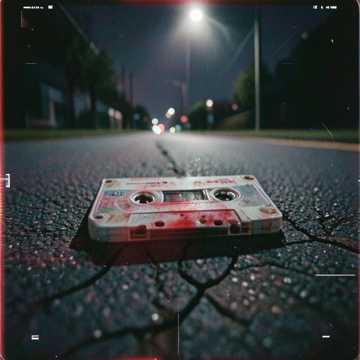
Graveyard Cassette conjures a grimy, late-night atmosphere through warped tape hiss, dusty cowbells, sliding bass, and a halftime trap stomp. Whispered female vocals and tense stop-start chants build toward a blunt, doubled hook, with reverse lifts and sub-drops sharpening each transition.
02:34
Invalid date

Кошачий министр
Игривая сюрреалистическая рэп-история о кошачьем министре, который руководит странным советом, принимает решения под рояль и обнаруживает, что детский крем Вадик способен примирить спорщиков. Пыльный бум-бэп, скретчи и выразительный вокал превращают абсурд в запоминающийся припев.
01:51
6 days ago
Cassette Texture: Definition, History, and Sonic Characteristics
Cassette texture is a music production aesthetic that reproduces or incorporates the audible qualities of analog cassette tape. These qualities can include tape hiss, low-level noise, soft compression, rounded high frequencies, reduced stereo width, pitch instability, wow and flutter, dropouts, saturation, and the slightly blurred character created by recording and replaying sound on magnetic tape. Cassette texture may come from an actual cassette recording, a cassette deck, a tape loop, cassette duplication, or digital plugins and samples designed to imitate cassette behavior. It is often associated with lo-fi music, bedroom pop, ambient music, vaporwave, hypnagogic pop, experimental electronic music, indie rock, hip-hop, and sound design. The history of Cassette texture begins with the development of compact cassette technology by Philips in the1960s. Although early cassette formats were designed for portability and speech recording, improvements in tape formulation, recording heads, noise reduction, and consumer hardware made cassettes a practical format for home music recording. During the1970s and1980s, musicians used four-track cassette recorders to create demos and complete releases in bedrooms, rehearsal spaces, and small studios. The limitations of cassette recording became part of the sound: multiple overdubs introduced hiss, high-frequency loss, distortion, and slight timing variation, while inexpensive microphones and tape decks added further coloration. In the1990s, cassette texture became important in lo-fi indie music, experimental tape composition, and underground releases. In the2000s and2010s, digital audio workstations made cassette-style processing widely accessible, helping the sound spread through chillwave, vaporwave, lo-fi hip-hop, ambient music, and online beat culture. Contemporary Cassette texture combines nostalgia for physical media with deliberate sonic design. Producers may use it subtly to make a clean recording feel intimate and aged, or heavily to create a degraded, dreamlike, unstable, and historically suggestive sound world.
Cassette Texture Sub-Tags and Classifications
Cassette hiss and tape noise
This classification focuses on the constant background noise associated with magnetic tape, including tape hiss, mechanical transport noise, electrical hum, and occasional clicks. Cassette hiss can make a recording feel intimate and handmade, especially when placed beneath vocals, piano, acoustic guitar, or ambient pads. Producers may preserve the natural noise of a cassette recording or add a controlled noise layer during mixing. The amount of hiss can range from barely audible realism to a prominent textural element that fills silent sections and connects separate musical passages.
Cassette saturation and soft distortion
Cassette saturation occurs when the magnetic tape or recording circuitry is driven beyond a clean operating level. It produces gentle harmonic distortion, softened transients, and a thicker midrange. Compared with aggressive digital clipping, cassette saturation usually sounds rounded and compressed, although heavily overloaded tape can become fuzzy, congested, and unstable. This Cassette texture classification is useful for warming drums, bass, vocals, synths, and sampled instruments while reducing an overly polished digital character.
Wow and flutter
Wow and flutter describe slow and fast variations in playback speed. Wow creates a broad, seasick pitch movement, while flutter produces quicker instability and modulation. In Cassette texture music, these effects can make sustained notes, tape loops, chords, and samples drift gently out of tune. Mild wow and flutter adds organic movement and nostalgia; stronger settings create a damaged-tape, dreamlike, or experimental sound. The effect is particularly common in ambient music, vaporwave, hypnagogic pop, and sound collage.
Cassette pitch drift and slowed tape
Pitch drift is created when a cassette is recorded or played at changing speeds, or when the tape is deliberately slowed. Slowing a recording lowers its pitch, extends its duration, reduces high-frequency detail, and emphasizes low-mid resonance. This form of Cassette texture is often used to transform familiar material into spacious ambient music, melancholic vocal passages, or dark electronic soundscapes. Producers may automate playback speed to create transitions, deceleration effects, and gradual shifts in emotional intensity.
Lo-fi cassette recording
Lo-fi cassette recording uses the technical limitations of cassette equipment as a central musical feature. Typical characteristics include narrow frequency response, modest dynamic range, background hiss, imperfect microphone placement, tape bleed, uneven levels, and audible room ambience. The result can feel personal and immediate because it preserves the conditions under which the music was made. This classification is common in bedroom pop, DIY punk, singer-songwriter recordings, experimental demos, and intimate acoustic performances.
Four-track cassette production
Four-track cassette production refers to multitrack recording made with compact cassette-based portastudios. Musicians can record separate parts, overdub layers, bounce tracks together, and create complete arrangements without a large studio. Each generation of bouncing adds noise and softens the sound, giving the final recording a dense and blended Cassette texture. Four-track methods encourage economical arrangements, creative microphone techniques, and performance-based production, and they remain influential in lo-fi rock, indie music, and experimental songwriting.
Cassette loop and tape-loop texture
Cassette loop music uses a looped section of tape to repeat a phrase, tone, rhythm, or environmental sound. Because the physical loop may have slight timing and pitch inconsistencies, repeated material develops a breathing, unstable quality. Tape loops can produce drones, rhythmic pulses, melodic fragments, and gradual changes caused by tape wear. This Cassette texture classification is closely related to ambient, minimal, musique concrète, sound art, and experimental electronic composition.
Reverse cassette and manipulated tape
Reverse cassette texture is created by reversing a tape recording or reversing an audio file that has been processed to resemble tape. It can generate backward reverberation, reversed vocals, inverted cymbal attacks, and unfamiliar rhythmic movement. Physical tape manipulation may also include cutting, splicing, stretching, stopping, or partially erasing tape. These techniques transform cassette texture into a compositional method for creating transitions, suspense, abstract sound effects, and fragmented musical structures.
Vaporwave and nostalgic cassette texture
In vaporwave and related styles, Cassette texture is often combined with slowed samples, pitch shifting, reverb, stereo manipulation, and sounds associated with older consumer technology. The resulting aesthetic can suggest forgotten broadcasts, home recordings, retail spaces, obsolete media, and distant memories. Tape hiss and pitch instability help make the source material feel physically aged, while the degraded frequency response creates separation from contemporary high-fidelity production.
Ambient and cinematic cassette texture
Ambient and cinematic Cassette texture uses tape coloration to create atmosphere rather than to emphasize a conventional song structure. Sustained synthesizers, field recordings, piano, strings, and environmental sounds can be processed with tape saturation, flutter, filtering, and long reverb. This approach creates warmth, suspension, vulnerability, and temporal distance. It is effective in reflective scenes, psychological drama, documentary sound design, and background music intended to support concentration or relaxation.
Cassette drum and sample texture
Cassette drum texture applies tape processing to kick drums, snares, percussion loops, and sampled breaks. The treatment can soften sharp transients, reduce excessive brightness, add low-mid body, and create cohesive glue between separate sounds. Sampling a rhythm from cassette also introduces timing irregularities and noise that can make programmed beats feel less mechanically perfect. This classification is widely used in lo-fi hip-hop, boom bap, downtempo, trip-hop, and experimental beat production.
Artists and Classic Works Related to Cassette Texture
R. Stevie Moore
R. Stevie Moore is a major figure in home recording and DIY pop. Across decades of self-produced material, he used inexpensive recording equipment, overdubbing, tape manipulation, and informal performance techniques to create intimate and eccentric recordings. His work demonstrates how cassette-era limitations can support unusual arrangements, personal vocals, melodic experimentation, and a direct relationship between performer and listener.
The Microphones — The Glow Pt.2
The Glow Pt.2 combines lo-fi recording, acoustic instruments, distorted electric guitar, ambient room sound, abrupt dynamic changes, and layered vocals. Its Cassette texture is heard through saturation, rough edges, uneven spatial placement, and a sense that performances are occurring in a real and imperfect environment. The album's innovation is its ability to make limited fidelity feel emotionally vast: quiet passages seem physically close, while noisy climaxes become overwhelming and cinematic.
Daniel Johnston
Daniel Johnston's home recordings are strongly associated with handmade lo-fi production, vulnerable songwriting, and the emotional immediacy of cassette-based work. His early tapes often preserve room sound, uneven levels, tape noise, and unpolished performances. These qualities made the recording process part of the artistic identity and influenced later indie musicians who use Cassette texture to communicate sincerity and closeness.
Boards of Canada — Music Has the Right to Children
This album uses soft filtering, tape-like saturation, sampled speech, unstable melodic material, analog synthesizers, and restrained rhythmic programming. Its Cassette texture supports a nostalgic atmosphere without making every track sound obviously damaged. The production often feels like a half-remembered educational film or an old television signal, with slightly blurred transients and muted high frequencies. The innovation lies in the careful balance between warmth, ambiguity, and detailed electronic arrangement.
The Microphones and Mount Eerie
Phil Elverum's work as The Microphones and Mount Eerie frequently combines field recordings, rough acoustic instruments, environmental ambience, tape coloration, and highly dynamic arrangements. Albums such as The Glow Pt.2 use distortion, room sound, saturation, and shifting textures to create an expansive yet personal listening experience. The contribution of this project lies in treating imperfect recording as a powerful expressive tool rather than a technical defect.
William Basinski — The Disintegration Loops
The Disintegration Loops are built from repeating tape loops that gradually lose their original form through physical decay. As the tape deteriorates, fragments disappear, noise becomes more prominent, and the harmonic image changes over time. The work treats magnetic media as both an instrument and a performer. Its major innovation is that the production process itself creates the composition: deterioration is not added as decoration but determines the structure, pacing, and emotional meaning.
Boards of Canada
Boards of Canada are known for warm analog coloration, degraded samples, unstable pitch, filtered melodies, and an atmosphere that evokes educational media, childhood memory, and worn-out broadcasts. Works such as Music Has the Right to Children and Geogaddi use tape-like processing as part of a carefully controlled sound world. Their approach helped establish nostalgic, imperfect electronic production as a sophisticated aesthetic rather than merely a low-budget recording method.
Daniel Johnston — Hi, How Are You
Hi, How Are You is an influential example of intimate home-recorded songwriting. The recording preserves direct vocals, simple keyboard and guitar parts, uneven performance details, and a raw cassette-era atmosphere. The limited fidelity draws attention to the emotional content and makes the listener feel close to the source performance. Its importance comes from showing that a recording can gain expressive power through vulnerability, simplicity, and the audible presence of its recording environment.
William Basinski
William Basinski's The Disintegration Loops are a landmark example of tape-loop composition. Repeated orchestral recordings gradually deteriorate as the physical tape passes through a failing playback process. The music turns tape decay into the main compositional structure, with loops slowly losing high-frequency detail and fragmenting over time. Basinski's work shows how cassette and tape texture can represent memory, erosion, duration, and transformation.
Guided by Voices — Bee Thousand
Bee Thousand uses compact arrangements, abrupt edits, short songs, layered guitars, and lo-fi recording characteristics associated with home and small-studio production. The Cassette texture gives the album a fragmented, discovered quality, as if the listener is hearing a collection of spontaneous recordings assembled from different moments. Its innovation is compositional as well as sonic: the album turns brevity, incompleteness, and rough fidelity into a coherent artistic language.
Ariel Pink
Ariel Pink helped bring home-recorded lo-fi pop into wider alternative music culture. Early recordings use blurred vocals, limited fidelity, tape saturation, rough rhythm machines, and dense layers of sound. His work demonstrates how Cassette texture can coexist with catchy songwriting, unusual pop structures, and deliberately artificial production. The contrast between memorable melodies and degraded audio became a defining part of the aesthetic.
Ariel Pink — The Doldrums
The Doldrums combines psychedelic pop, rhythm machines, unusual vocal treatments, simple melodic hooks, and heavily colored home-recording production. Cassette-like softness and distortion blur the boundaries between individual instruments, while the lo-fi surface creates distance from conventional studio pop. The album helped demonstrate that degraded production could support complex pop references, surreal lyrics, and memorable songwriting.
Bastro and Guided by Voices
Guided by Voices are closely associated with compact recording methods, short song forms, rough edits, and the vivid immediacy of lo-fi indie rock. Albums such as Bee Thousand show how cassette-style fidelity can preserve spontaneity while supporting a large number of ideas in a single release. Their influence encouraged independent artists to treat home recording, tape noise, and imperfect takes as creative advantages.
The Caretaker — Everywhere at the End of Time
This long-form work develops through repeated ballroom and orchestral fragments that become increasingly obscured by looping, filtering, distortion, and noise. Its relationship to Cassette texture comes from the use of aged-media characteristics to suggest deterioration and unstable memory. Instead of using tape effects only for warmth or nostalgia, the project uses degradation as a narrative mechanism. Each stage changes the listener's understanding of repetition, familiarity, and silence.
The Caretaker
The Caretaker project uses archival samples, repetition, degradation, surface noise, and gradual loss of musical identity to explore memory and cognitive decline. Although the work is not limited to cassette recording, its use of aged-media texture is highly relevant to Cassette texture aesthetics. Albums such as Everywhere at the End of Time demonstrate how repetition, filtering, distortion, and deterioration can produce a powerful narrative without relying on conventional songwriting.
Various Artists — Four-track cassette demos and bedroom recordings
Four-track cassette demos form an important body of work rather than a single album. These recordings often use track bouncing, cassette saturation, limited microphone inputs, and performance decisions shaped by a small track count. The resulting texture blends vocals, guitars, keyboards, drums, and room ambience into a unified but imperfect image. Their lasting contribution is the demonstration that affordable recording technology can support distinctive authorship, experimentation, and complete musical releases.
Slauson Malone
Slauson Malone incorporates fragmented samples, tape-like degradation, abrupt edits, ambient noise, and unconventional collage techniques into experimental hip-hop and electronic composition. His work shows how Cassette texture can be used as a structural device: material may appear briefly, break apart, return in altered form, or dissolve into noise. This expands cassette aesthetics beyond nostalgia into abstraction and sound collage.
Cassette Texture Applications in Music, Media, and Sound Design
Cassette texture can establish a specific period, location, or emotional perspective in a film. A scene set in the1980s may use cassette hiss, narrow frequency response, and pitch instability to make a song feel like a recording played from an old boombox. In psychological drama, degraded loops and unstable pitch can represent unreliable memory or emotional distress. For reflective scenes, a lightly saturated piano or guitar can create intimacy and make the soundtrack feel personal rather than monumental.
Independent film and movie soundtracks
Documentaries can use Cassette texture to connect modern narration with historical recordings, interviews, home videos, or recovered audio. Tape noise and uneven frequency response help distinguish archival material from newly recorded dialogue. A producer can also apply a restrained cassette treatment to original music so that it feels connected to family history, analog media, or a particular decade.
Documentary and archival storytelling
Cassette texture works well in advertising when a brand wants to communicate nostalgia, authenticity, handmade quality, youth culture, or retro technology. A short beat with tape saturation and a little hiss can make a product video feel warm and familiar. In a fashion, food, travel, or lifestyle campaign, cassette processing can support a vintage visual identity while keeping the underlying melody clear. The effect should be controlled so that the message and voiceover remain intelligible.
Advertising and brand identity
Game composers use Cassette texture to shape the identity of levels, characters, and fictional worlds. A worn tape loop can suit an abandoned facility, a memory sequence, a retro arcade, or a dreamlike exploration area. Pitch drift can make a safe environment feel subtly unstable, while cassette saturation can give lo-fi beats and ambient pads a cohesive atmosphere. Interactive systems can also increase noise, filtering, or wow and flutter as the player enters a damaged or surreal area.
Video game background music
Cassette texture can complement pixel art, VHS-inspired visuals, and interfaces modeled on older consumer electronics. Designers may use short cassette clicks, tape stops, mechanical transport sounds, and degraded melodic loops for menus, transitions, and loading screens. The texture helps create a period-inspired world while distinguishing the soundtrack from clean modern synthwave production.
Retro games and pixel-art projects
A subtle cassette bed can give a podcast introduction the feeling of a personal archive, field diary, or recorded conversation. Tape hiss and gentle saturation may make music feel closer and less sterile, while short mechanical sounds can mark transitions. Because excessive processing can reduce speech clarity, the cassette treatment is usually kept on the music layer and applied carefully around dialogue.
Podcast intros and spoken-word production
Ambient producers use Cassette texture to soften synthesizers, piano, field recordings, and sustained tones. Gentle wow and flutter adds slow movement, while tape hiss fills the gaps between notes and reduces the sense of digital silence. This approach can create a warm background for meditation, sleep, reading, studying, or quiet visual content. A restrained treatment is generally more effective when the goal is calm rather than dramatic degradation.
Ambient music and relaxation content
Cassette texture is a central sound in many lo-fi hip-hop tracks. Producers may record drums or samples through a cassette deck, apply tape saturation to the master bus, or layer hiss and vinyl-like noise with chopped melodic material. Slight timing and pitch variation make programmed loops feel more human, while reduced high frequencies leave space for a soft, relaxed listening experience.
Lo-fi hip-hop and beat production
Artists can use Cassette texture to preserve the feeling of a home performance. A lightly degraded vocal, acoustic guitar, or keyboard can suggest physical closeness and reduce the distance created by highly polished studio production. Four-track recording also encourages artists to make arrangement decisions within practical limitations, often resulting in direct performances and distinctive layered textures.
Indie pop, bedroom pop, and singer-songwriter recordings
Artists use cassette loops, reverse playback, tape splicing, and repeated degradation to explore memory, media history, repetition, and physical decay. A gallery installation might play several altered tape loops at different speeds, allowing visitors to hear gradual shifts in pitch and noise. In this context, Cassette texture is both an audible surface and a reflection on the material life of recorded sound.
Experimental sound art and gallery installations
A cassette stop, pitch drop, reversed fragment, or sudden burst of tape noise can create a memorable transition in a trailer or title sequence. These effects are useful for projects centered on mystery, nostalgia, analog technology, horror, or psychological tension. The texture can begin as a familiar melodic idea and then deteriorate, giving the audience an immediate sense of transformation.
Trailers, title sequences, and opening credits
Short videos can use Cassette texture to support retro edits, analog photography, thrift fashion, travel diaries, nostalgic storytelling, and handmade product demonstrations. A compact loop with audible tape character can make a visual post feel more distinctive than a clean stock-music track. Since short-form content is often consumed on small speakers, the cassette effect should retain enough midrange and rhythmic definition to remain recognizable.
Social media videos and short-form visual content