
Free German punk Music Generator Powered by AI
Turn text into high-quality German punk music effortlessly – no login required!

music.toolTips
11111
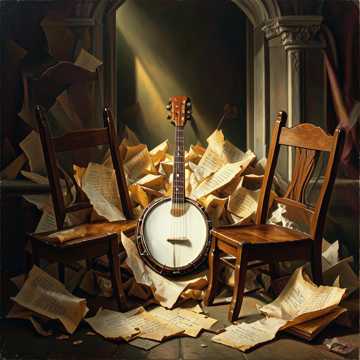
Der Song verspottet bürokratische Endlosschleifen, übertriebene Regelgläubigkeit und lähmende Selbstzweifel. Zwischen schnellem Banjo-Picking, rauem Punkgesang und explosiven Mitgröhl-Refrains entsteht eine rebellische Hymne, die zum Handeln auffordert: Schluss mit dem Stillstand, jetzt geht es los.
03:29
6 days ago
German Punk: Definition, Origins, and Historical Development
German punk refers to punk music created in Germany, particularly music associated with German-language lyrics, local underground scenes, and the social, political, and cultural conditions of Germany. Although German punk shares the international punk foundations of short songs, distorted guitars, fast tempos, direct vocals, do-it-yourself production, and anti-establishment attitudes, it developed a distinctive identity through its use of German lyrics, political commentary, humor, urban alienation, and responses to the division and reunification of Germany. German punk is therefore both a musical style and a broad cultural movement involving independent record labels, self-organized concerts, squats, fanzines, rehearsal spaces, and alternative youth communities. The earliest German punk activity emerged in the mid-to-late1970s, especially in West Berlin, Düsseldorf, Hamburg, and other major cities. Early bands were influenced by British and American punk but quickly adapted the style to local realities, including postwar social tensions, political polarization, industrial decline, and resistance to mainstream cultural values. West Berlin became an important center because of its unusual political status, active underground culture, and concentration of artists and alternative communities. Düsseldorf developed another influential scene around bands such as Male, Charley's Girls, Mittagspause, and Fehlfarben, whose members helped connect punk with post-punk, new wave, and experimental rock. In the early1980s, German punk became more overtly political. Bands such as Slime used confrontational German lyrics to address militarism, state authority, police power, capitalism, and social injustice. At the same time, Neue Deutsche Welle introduced punk energy to a wider audience, although its relationship with underground German punk varied from band to band. In East Germany, punk developed under different conditions. Bands and fans faced surveillance, censorship, limited access to instruments and recordings, and pressure from state authorities. Despite these restrictions, East German punk scenes formed in cities including East Berlin, Leipzig, Dresden, and Erfurt. After the fall of the Berlin Wall and German reunification, German punk became more nationally connected and increasingly diverse. The1990s saw the expansion of melodic punk, skate punk, hardcore punk, pop punk, crust, and anarcho-punk. Bands such as Die Toten Hosen and Die Ärzte brought punk-derived songwriting to large audiences, while independent groups continued to preserve the genre's underground and political traditions. Contemporary German punk includes classic street punk, political punk, Deutschpunk, hardcore, post-punk, feminist punk, queer punk, and experimental forms that combine punk with electronic music, hip-hop, metal, or noise. Its central characteristics remain energetic performance, memorable guitar-driven arrangements, a strong DIY ethos, and lyrics that engage with everyday life, politics, identity, protest, and social change.
German Punk Sub-Tags and Classifications
Deutschpunk
Deutschpunk is one of the most recognizable classifications within German punk. The term generally describes German-language punk with direct, socially critical lyrics, raw production, fast rhythms, and a strong connection to independent underground culture. Deutschpunk often emphasizes political protest, anti-authoritarian ideas, working-class perspectives, and criticism of nationalism, militarism, capitalism, and institutional power. Its sound can range from rough three-chord songs to more aggressive hardcore-influenced arrangements. The term is sometimes used broadly for German punk in general, but it is particularly associated with the uncompromising, DIY-oriented scene that developed in the late1970s and early1980s.
Political and Anarcho-Punk
Political and anarcho-punk in Germany places activism and ideological critique at the center of the music. Songs frequently address fascism, racism, war, police authority, environmental destruction, capitalism, and social inequality. German political punk is often linked to benefit concerts, antifascist organizing, autonomous centers, independent labels, and self-published zines. Musically, it may use raw punk, hardcore, crust, or melodic arrangements, but the defining feature is the relationship between music and political participation. Bands and audiences in this category often treat concerts as community spaces rather than merely commercial entertainment.
Street Punk and Oi!-Influenced German Punk
Street punk and Oi!-influenced German punk is characterized by forceful guitar riffs, shouted or gang-style choruses, stomping rhythms, and lyrics about working-class identity, friendship, neighborhood life, and confrontation with authority. In Germany, this category has included both anti-racist and antifascist scenes as well as politically controversial groups, so the ideological context of individual bands is important. The musical style is often direct and communal, making it especially effective in live settings where audiences sing along to repeated refrains.
German Hardcore Punk
German hardcore punk developed from the speed and intensity of early punk, adding heavier guitar tones, faster drumming, shouted vocals, breakdown-like sections, and a more physically intense performance style. German hardcore scenes have included political, straight-edge, antifascist, and DIY communities. Many bands released records through small independent labels, toured extensively across Europe, and connected German venues with international hardcore networks. The genre can be abrasive and aggressive, but it also emphasizes collective participation, self-organization, and resistance to commercial music structures.
Melodic Punk, Skate Punk, and Pop Punk
Melodic German punk combines the speed and attitude of punk with polished hooks, harmonized guitar lines, accessible song structures, and emotionally direct lyrics. This classification became especially visible from the1990s onward, when German punk bands reached larger festival and radio audiences. Skate punk and pop punk often use compact arrangements, energetic drumming, and highly memorable choruses. While these styles may sound more accessible than raw Deutschpunk, many bands continue to address friendship, frustration, political concerns, relationships, and outsider identity.
Feminist, Queer, and Riot Grrrl-Influenced German Punk
Feminist, queer, and riot grrrl-influenced German punk challenges male-dominated conventions within both mainstream culture and punk communities. Artists in this classification address sexism, gender identity, sexual autonomy, harassment, body politics, and LGBTQ+ rights. The music may combine raw punk, post-punk, hardcore, electronic sounds, and spoken-word elements. These scenes are also defined by inclusive concert practices, safer-space policies, activist networks, and the use of independent platforms to amplify underrepresented voices.
Post-Punk and New Wave-Influenced German Punk
German post-punk and new wave developed from the original punk movement but expanded its musical vocabulary through angular guitar parts, minimalist bass lines, drum-machine patterns, synthesizers, unusual vocal delivery, and atmospheric production. Groups connected to the Düsseldorf and West Berlin scenes demonstrated that punk could be experimental, danceable, art-oriented, or introspective without losing its critical edge. This classification overlaps with Neue Deutsche Welle and German underground rock, making it an important bridge between punk, electronic music, industrial music, and alternative pop.
East German Punk
East German punk refers to punk scenes that developed in the German Democratic Republic before reunification. Because musicians operated under censorship, surveillance, material shortages, and limited access to Western recordings, East German punk had a distinctive underground character. Rehearsals and concerts often took place in churches, youth clubs, or semi-official spaces, while lyrics could use metaphor, coded language, or blunt rejection of state conformity. The scene is historically important because it shows how punk functioned as a form of cultural independence under a socialist state.
Experimental, Art-Punk, and Industrial-Adjacent German Punk
Experimental German punk incorporates noise, performance art, free improvisation, tape manipulation, unconventional percussion, electronic textures, and industrial sound design. Artists associated with this direction often reject standard verse-chorus structures and explore themes of technology, urban anxiety, bodily movement, and social control. Although some groups are classified more accurately as post-punk, industrial, or avant-garde rock, their connection to German punk lies in their DIY methods, confrontational presentation, and rejection of conventional rock aesthetics.
Famous German Punk Artists and Related Works
Die Toten Hosen
Formed in Düsseldorf in1982, Die Toten Hosen became one of the most commercially successful German punk bands while retaining strong links to punk's live energy and communal culture. Their representative albums include "Opium fürs Volk", "Unsterblich", and "Kreuzfeuer", while songs such as "Hier kommt Alex", "Wünsch DIR was", and "Tage wie diese" demonstrate their range from socially critical punk rock to large-scale anthem writing. The band helped bring German-language punk to mainstream festivals and arenas without abandoning guitar-driven arrangements, direct vocals, and politically engaged themes. Their work also helped establish Düsseldorf as a major location in the history of German punk.
Slime - "Slime I"
Slime's debut album is a defining document of early political Deutschpunk. Its songs are fast, compact, and aggressively performed, with distorted guitars, forceful drums, and vocals that sound closer to a public denunciation than conventional rock singing. The album's innovation lies in its direct use of German to address police violence, militarism, state power, and national identity. Rather than treating punk as abstract rebellion, it connects the genre to specific institutions and social conflicts. Its raw production and confrontational writing became a template for later German political punk.
Die Ärzte
Die Ärzte emerged from West Berlin in the early1980s and developed a distinctive form of German punk built around sharp melodies, playful arrangements, satire, and provocative humor. Representative releases include "Debil", "Die Bestie in Menschengestalt", and "13". Songs such as "Schrei nach Liebe" combine catchy punk-rock songwriting with an explicit antifascist message, while other tracks use irony and absurdity to question social conventions. Die Ärzte expanded the expressive possibilities of German punk by showing that politically aware music could also be witty, melodic, theatrical, and highly accessible.
Fehlfarben - "Monarchie und Alltag"
"Monarchie und Alltag" is a key work in the transition from early German punk to post-punk and Neue Deutsche Welle. The album uses angular guitar parts, prominent bass, restrained but energetic drumming, and sharply edited lyrics that observe everyday life, consumer culture, political stagnation, and urban alienation. Its innovation is not based on speed alone; instead, Fehlfarben create tension through repetition, rhythmic contrast, and precise arrangement. The record remains influential because it shows how German-language punk could become musically sophisticated without losing its sense of dissatisfaction.
Slime
Hamburg's Slime are central to the history of political German punk. Their early material, including the album "Slime I", is known for fast tempos, harsh guitar tones, shouted vocals, and uncompromising criticism of police power, militarism, nationalism, and state authority. Songs such as "Bullenschweine" and "ACAB" became associated with confrontational protest culture, while "Deutschland" expressed a deeply critical view of national identity. Slime helped define the political vocabulary of Deutschpunk and influenced generations of antifascist and anarchist punk musicians.
Die Ärzte - "Debil"
"Debil" introduced a playful and highly melodic side of German punk. The album combines compact punk-rock structures with humor, provocative themes, catchy vocal lines, and a deliberately irreverent attitude. Its importance lies in the way it treats comedy as a punk strategy: absurdity and satire are used to challenge censorship, social morality, and expectations about serious rock music. The record helped establish Die Ärzte's distinctive identity and contributed to the broader popularity of German-language punk.
Ton Steine Scherben
Ton Steine Scherben formed in West Berlin in1970, before the conventional German punk era, but their politically radical rock and DIY approach became a major influence on later German punk. Their albums "Warum geht es mir so dreckig?" and "Keine Macht für Niemand" combined protest lyrics, raw rock, theatrical intensity, and communal political ideals. Rio Reiser's direct German-language songwriting showed that local-language music could address social conflict with unusual emotional force. The band's anti-authoritarian attitude and independent infrastructure made them important predecessors of German punk.
Die Toten Hosen - "Opium fürs Volk"
"Opium fürs Volk" presents a more expansive and polished form of German punk rock while retaining the genre's emphasis on memorable guitar writing and social commentary. The album explores religion, morality, personal conflict, collective behavior, and political frustration. Its arrangements are designed for both close listening and large live audiences, with strong choruses and dynamic shifts. The record illustrates how German punk can reach mainstream scale while preserving emotional urgency and a critical perspective.
Fehlfarben
Fehlfarben grew out of the Düsseldorf underground and connected punk with post-punk, new wave, funk, and art-rock experimentation. Their1980 album "Monarchie und Alltag" is widely regarded as a landmark of German-language alternative music. Songs such as "Ein Jahr (Es geht voran)" use concise guitar parts, rhythmic bass, and socially observant lyrics to portray urban life and political unease. Fehlfarben helped demonstrate that German punk could evolve beyond raw speed into sophisticated arrangements while preserving its tension and oppositional spirit.
Ton Steine Scherben - "Keine Macht für Niemand"
Released in the early1970s, "Keine Macht für Niemand" predates the classic German punk boom but is foundational to its political culture. The album combines raw rock instrumentation, emotionally intense vocals, and revolutionary German-language lyrics. Its central ideas of resistance, solidarity, and opposition to concentrated power strongly influenced later punk musicians. The work's innovative quality comes from its combination of political organizing, independent production, and songs that function as both personal expression and collective slogans.
Abwärts
Hamburg's Abwärts contributed to the development of German post-punk and dark, experimental punk. Their early releases, including "Amok Koma" and the song "Computerstaat", combine repetitive rhythms, abrasive guitar textures, electronic elements, and dystopian themes. Abwärts' work reflects the anxiety surrounding technology, bureaucracy, urban life, and social control. Their sound expanded the boundaries of German punk by incorporating a colder and more mechanical aesthetic.
Abwärts - "Computerstaat"
"Computerstaat" is an important example of German punk's movement toward post-punk and electronic experimentation. Its repetitive, mechanical rhythm and dystopian lyrical focus create a feeling of technological pressure and bureaucratic control. The song's stripped-down structure and cold sonic atmosphere differ from the more traditional guitar attack of early Deutschpunk, demonstrating that punk could express alienation through minimalism, repetition, and machine-like textures.
WIZO
WIZO became a prominent name in German melodic and political punk, particularly through their energetic live shows, sarcastic lyrics, and independent approach. Albums such as "Uuaarrgh!" and "Herrénhandtasche" combine fast punk arrangements with humor, provocation, and criticism of social hypocrisy. WIZO's work helped connect the raw attitude of Deutschpunk with the catchy structures of melodic punk, while their DIY orientation kept them closely connected to independent punk culture.
Die Ärzte - "Schrei nach Liebe"
"Schrei nach Liebe" is one of the best-known antifascist songs associated with German punk. It combines an accessible punk-rock melody with direct condemnation of right-wing violence and extremist ideology. The song's effectiveness comes from the contrast between its memorable chorus and its uncompromising lyrical message, allowing it to function both as a protest statement and as a widely recognized rock song. It demonstrates the ability of German punk to communicate political ideas beyond the underground scene.
Mülheim Asozial
Mülheim Asozial represent a more recent direction in German punk that combines fast, rough-edged songwriting with sharp social observation and an intentionally abrasive presentation. Their music draws attention to precarious work, urban frustration, alienation, and everyday class conflict. The group illustrates how contemporary German punk continues to use minimal production, concise songs, and confrontational language to document life outside polished mainstream culture.
Einstürzende Neubauten
Although more accurately classified as industrial, experimental rock, or avant-garde music, Einstürzende Neubauten are closely related to the wider German punk and post-punk environment of the early1980s. Their use of scrap metal, power tools, found objects, noise, and performance art challenged conventional ideas about instruments and composition. The group demonstrates how German punk's DIY and anti-traditional principles could develop into radical sound experimentation and influential industrial music.
German Punk Music Application Scenarios
German punk is well suited to films depicting rebellious youth, outsider identity, urban frustration, political awakening, or the underground scenes of West and East Germany. Fast drums, distorted guitars, and direct German lyrics can immediately establish a period, location, and emotional viewpoint. A filmmaker might use raw Deutschpunk during scenes in rehearsal rooms, squats, basement concerts, demonstrations, or nighttime city streets. Music licensing should be secured from the relevant rights holders, especially when using historically significant recordings.
Film Soundtracks About Youth Rebellion
German punk can provide strong cultural context in documentaries about the Cold War, German reunification, antifascist activism, youth subcultures, police conflict, urban redevelopment, or the history of independent music. Tracks from different periods can help distinguish West German punk, East German punk, post-reunification scenes, and contemporary political movements. Instrumental recreations inspired by German punk can also be used when original recordings are unavailable or licensing costs are too high.
Historical and Political Documentaries
Short German punk-inspired guitar hooks, shouted backing vocals, and energetic drum patterns can support advertising for skatewear, vintage clothing, independent fashion, music equipment, record stores, festivals, and youth-oriented products. The style works best for brands seeking an authentic, rebellious, handmade, or anti-mainstream identity. Commercial use should avoid copying a recognizable band or song without permission; original music can borrow broad genre characteristics while maintaining a distinct composition.
Advertising for Alternative Fashion and Youth Brands
German punk can enhance video games set in urban environments, protest movements, post-industrial cities, underground clubs, or dystopian societies. Fast punk loops are effective for chase sequences, street racing, combat, skateboarding, and action gameplay, while darker post-punk or industrial-influenced textures can support exploration and narrative tension. Adaptive game music can layer guitar distortion, percussion, crowd chants, and bass as the player's intensity increases.
Video Game Background Music
The communal choruses and rhythmic directness of German punk make it useful for football terraces, skateboarding events, BMX competitions, wrestling promotions, and other high-energy sports contexts. Songs with repeated refrains can encourage crowd participation and create a strong local identity. Event organizers should consider whether the lyrical content aligns with the venue's audience and should obtain public-performance and synchronization permissions where applicable.
Sports Events and Stadium Anthems
Political German punk can support videos about antifascism, climate activism, labor rights, migration, LGBTQ+ rights, housing struggles, and community organizing. Its confrontational sound can intensify a call to action, while melodic punk can make advocacy content more accessible. Producers should match the music's political meaning with the subject of the video and avoid using a song in a way that contradicts the artist's stated values.
Documentary and Editorial Video for Social Causes
Low-budget filmmakers and web creators often use German punk because it conveys immediacy, realism, and a sense of local identity without requiring elaborate musical arrangements. A small band performance, rehearsal recording, or DIY track can make characters feel embedded in a real subculture. Original commissions from emerging German punk bands can provide affordable, authentic music while also supporting the independent scene.
Independent Film, Web Series, and Youth Drama
German punk is a natural choice for promotional videos about punk festivals, club tours, independent record fairs, and alternative cultural events. Rapid editing synchronized to snare hits, guitar changes, and shouted choruses can communicate excitement within a short trailer. Archival footage, gig photography, hand-drawn posters, and rehearsal-room recordings can reinforce the historical and DIY character of German punk.
Concert Promos, Festival Trailers, and Music Documentaries
Short licensed excerpts of German punk can introduce podcast episodes or radio segments about youth culture, German history, music journalism, and social movements. Different sub-tags can be used to illustrate how raw Deutschpunk, post-punk, hardcore, melodic punk, and East German punk developed differently. Educational producers should provide accurate artist credits and historical context rather than presenting German punk as a single uniform sound.
Podcasts, Radio Features, and Cultural Education