Free dub delays Music Generator Powered by AI
Turn text into high-quality dub delays music effortlessly – no login required!

music.toolTips
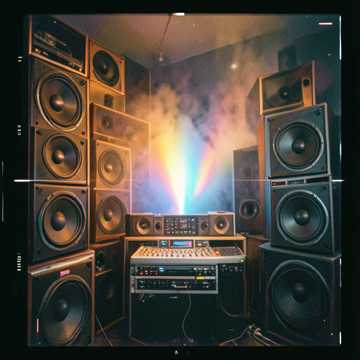
come get some _MC TEST_1
Come Get Some is a high-pressure dub hip-hop anthem built around booming bass, rising frequencies, speaker-stack imagery, and crowd-ready repetition. Its gritty golden-age MC delivery, vinyl texture, dub echoes, and heavy drop create an energetic sound-system experience designed for clubs, live sessions, DJ sets, and bass-focused listening.
05:57
6 days ago
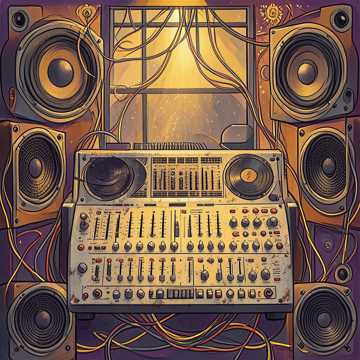
second to none _MC TEST
A forceful hip-hop sound-system anthem celebrating lyrical confidence, DJ technique, deep bass, and unstoppable momentum. Its rugged verses, chant-ready hooks, dub textures, and warm vinyl atmosphere create a competitive underground energy that turns every beat into a declaration of mastery.
03:22
6 days ago
Nevermind ya hunch_Test_
A forceful science-versus-hunch anthem blending boom-bap bravado with dub pressure and cosmic imagery. Dense drums, scratch textures, and echoing vocals create a restless sound-system experience where data, vibration, chemistry, and battle-ready confidence collide.
03:05
6 days ago
Dub Delays: Definition, Sound, and Musical History
Dub Delays is a music production style and sound-design tag centered on the use of echo, tape delay, feedback, and spacious rhythmic repetition in dub-influenced music. Rather than describing one strictly defined genre, the term Dub Delays usually refers to tracks in which delayed percussion, vocals, bass phrases, guitar lines, synthesizers, and sound effects become important musical elements. The characteristic sound is often deep, spacious, rhythmic, and highly atmospheric, with individual sounds appearing to travel across the stereo field or dissolve into repeating echoes. The roots of Dub Delays can be traced to Jamaican dub music in the late1960s and1970s. Producers and engineers such as King Tubby and Lee "Scratch" Perry transformed existing reggae recordings by removing or reducing vocals, emphasizing drums and bass, and sending selected sounds through spring reverb, tape echo, filters, and mixing-desk effects. Delay was not simply used as decoration; it became a performance instrument that could reshape the arrangement in real time. During the1970s and1980s, dub delay techniques spread into post-punk, reggae, electronic music, hip-hop, ambient music, and experimental production. In later decades, artists working in techno, downtempo, drum and bass, trip-hop, sound system music, and cinematic electronic music adopted synchronized digital delays alongside vintage tape and analog hardware. Modern Dub Delays productions may combine classic Jamaican echo aesthetics with stereo ping-pong delay, tempo-synced plug-ins, granular processing, sidechain compression, and automated feedback. As a result, the Dub Delays tag can describe both traditional dub mixes and contemporary tracks that use delay as a central compositional and spatial technique.
Dub Delays Sub-Tags and Classifications
Classic Jamaican Dub Delay
This classification focuses on the foundational sound of Jamaican dub: heavy bass, spacious drums, stripped-back arrangements, spring reverb, tape echo, and sudden drops. Engineers often send snare hits, vocal fragments, horns, or guitar skanks into a delay unit for a few repeats, then remove the effect abruptly. The contrast between dry rhythm sections and expanding echoes gives Classic Jamaican Dub Delay its dramatic, physical sound.
Tape Echo Dub
Tape Echo Dub uses analog tape machines or tape-emulation effects to create warm, slightly unstable repeats. The echoes may lose high frequencies, saturate, wobble in pitch, and become progressively more blurred as feedback increases. This sub-tag is associated with vintage dub, roots reggae, lo-fi electronica, and productions seeking a textured, organic alternative to clean digital delay.
Digital and Ping-Pong Dub Delay
Digital and Ping-Pong Dub Delay uses precise digital processors to move repeated sounds between the left and right channels. The result can be highly rhythmic and immersive, especially when delay times are synchronized to the tempo. This approach is common in modern dub techno, electronic dance music, progressive production, and headphone-oriented sound design.
Dub Techno Delay
Dub Techno Delay combines minimal techno structures with deep chords, restrained percussion, low-frequency pressure, and long filtered echoes. Chords are often sent through delay and reverb so that they form a slowly changing atmospheric background. The style favors repetition, subtle modulation, and gradual development rather than frequent melodic or structural changes.
Vocal Dub Delay
Vocal Dub Delay places spoken phrases, ad-libs, chants, or short sung lines into an echo-based arrangement. Producers may repeat a single word, automate the feedback level, or filter the vocal repeats until the voice becomes part of the rhythm and ambience. This classification is useful for reggae, trip-hop, hip-hop, ambient music, and cinematic tracks that need a strong sense of space.
Percussive Dub Delay
Percussive Dub Delay treats delayed drums as a rhythmic instrument. Snare hits, rimshots, hi-hats, toms, and found sounds can be repeated at quarter-note, eighth-note, dotted, or irregular intervals. Carefully controlled feedback creates secondary rhythms without overcrowding the original beat, making this sub-tag effective in dance music, trailers, and experimental sound design.
Ambient and Atmospheric Dub Delay
Ambient and Atmospheric Dub Delay emphasizes long decays, soft transients, slow modulation, and spacious stereo movement. Pads, guitars, field recordings, and synthesizers may be allowed to repeat until their original identities become diffuse. This approach creates meditative, nocturnal, futuristic, or dreamlike environments and is often found in ambient, chillout, drone, and soundtrack music.
Dub Breaks and Bass Delay
Dub Breaks and Bass Delay combines syncopated breakbeats or broken rhythms with sub-bass, filtered effects, and rhythmic echoes. The delay is frequently automated around fills and transitions, producing drops, reverses, and bursts of repeated percussion. This classification connects Dub Delays with breakbeat, drum and bass, UK bass, jungle, and bass-heavy club music.
Experimental and Glitch Dub Delay
Experimental and Glitch Dub Delay uses unconventional delay times, feedback overload, buffer manipulation, pitch-shifting, granular repetition, and abrupt signal cuts. Instead of maintaining a smooth echo, the producer may intentionally push the processor into unstable or fragmented territory. The resulting sound is suitable for avant-garde electronic music, sound art, game audio, and futuristic media.
Famous Dub Delays Artists and Related Works
King Tubby
King Tubby, born Osbourne Ruddock, is one of the central figures in the development of dub production and Dub Delays. His mixes emphasized the recording console as a live performance instrument, using echo, reverb, filtering, dropouts, and dramatic changes in drum-and-bass balance. Representative releases associated with his work include "The Return of the Super Ape" and the many Jamaican dub versions created at his studio. His approach established the idea that a remix could become a new composition and helped define the spacious, rhythmic language of Dub Delays.
King Tubby Meets Rockers Uptown - Augustus Pablo
This landmark dub recording is built around a deep rhythm section, Augustus Pablo's melodica, and an unusually spacious mix. Delay and reverb are used selectively rather than continuously: a drum hit may suddenly expand into the stereo field, while a melodica phrase appears and disappears against the bass. The innovation of the work is its use of mixing decisions as composition. Sections are created through subtraction, echo throws, dropouts, and changes in instrumental emphasis, making the studio itself part of the musical performance.
Lee "Scratch" Perry
Lee "Scratch" Perry was a pioneering Jamaican producer whose work at the Black Ark studio combined dub delay, spring reverb, tape manipulation, unconventional recording methods, and dense layers of percussion and vocal effects. Albums such as "Super Ape" demonstrate his surreal use of echoes and studio texture. Perry expanded Dub Delays beyond technical processing, treating delay as a way to create a psychedelic environment in which voices, drums, bass, and found sounds could interact.
Super Ape - Lee "Scratch" Perry
Super Ape presents dub as a surreal, highly textured sonic world. Percussion, vocals, horns, and sound effects are placed in a dense but spacious environment, with echoes and reverb connecting separate parts of the mix. Perry's innovation was not only the use of delay but also the combination of delay with distortion, tape coloration, unusual balances, and imaginative recording techniques. The album remains a key example of how Dub Delays can sound earthy, psychedelic, mysterious, and rhythmically compelling at the same time.
Scientist
Scientist, the studio name of Hopeton Overton Brown, developed a highly recognizable dub style built around powerful bass, sharp drum edits, dramatic effects, and expansive delay throws. Releases including "Scientist Rids the World of the Evil Curse of the Vampires" are notable for their cinematic concepts and aggressive mixing. His work helped make dub effects accessible to international listeners and showed how a Dub Delays production could function like a sound narrative.
Scientist Rids the World of the Evil Curse of the Vampires - Scientist
This concept-driven dub album uses a cinematic framework to organize heavy bass, edited drums, siren-like effects, vocal fragments, and echo. Delay helps create tension by extending isolated sounds into empty spaces, then cutting them off before they become predictable. Its innovation lies in treating a dub album as a sequence of scenes, with production effects functioning like sound-design cues in a film.
Augustus Pablo
Augustus Pablo is best known for his melodica-led reggae and dub recordings, but his contribution to Dub Delays is equally important because of the way melodic fragments interact with echo, reverb, and spacious rhythm sections. Works such as "King Tubby Meets Rockers Uptown" pair Pablo's haunting melodica with deep bass, edited drums, and carefully placed delay. His music demonstrates how a simple melodic line can become atmospheric and emotionally powerful through dub processing.
Dub Me Crazy, Part One - Mad Professor
Dub Me Crazy, Part One shows how a later-generation producer could preserve the core Jamaican dub vocabulary while making it more polished and adaptable to new contexts. The music features prominent bass, chopped vocal material, delay feedback, reverb, and abrupt transitions. Its importance to Dub Delays is found in the balance between traditional sound-system impact and studio experimentation, making the record influential among reggae, electronic, and crossover producers.
Mad Professor
Mad Professor, the alias of Neil Fraser, carried Jamaican dub traditions into later decades while integrating modern studio technology and international collaborations. Albums such as "Dub Me Crazy" use deep bass, delay feedback, vocal fragments, and sudden structural edits. His productions helped connect classic Dub Delays with electronic music, hip-hop, trip-hop, and contemporary sound-system culture.
Quadrant Dub - Basic Channel
Quadrant Dub translates the principles of Jamaican dub into a minimal techno framework. Repetitive percussion and restrained chord figures are processed with filtering, echo, and reverberation until the track feels both mechanical and submerged. Instead of relying on frequent arrangement changes, the piece creates movement through small shifts in texture, delay trails, and stereo depth. It is a defining example of Dub Techno and a major reference for modern Dub Delays production.
Adrian Sherwood
Adrian Sherwood and his On-U Sound label brought dub mixing methods into post-punk, industrial, experimental, and alternative music. His productions frequently use delay, reverb, tape texture, heavy bass, and unusual edits to destabilize conventional song structures. Sherwood's work shows how Dub Delays can be applied outside reggae while retaining its emphasis on space, rhythm, bass, and studio intervention.
Kingston Dub
The term Kingston Dub represents a broad body of foundational Jamaican productions rather than one single universally defined recording. These works typically place bass and drums at the center, remove or reduce lead vocals, and use echo, spring reverb, filters, and mixer fades to reinterpret a rhythm. Their enduring innovation is the conversion of remixing into live composition, a principle that continues to influence electronic music, hip-hop sampling, ambient production, and cinematic sound design.
Basic Channel
The Berlin-based Basic Channel project helped define the relationship between dub techniques and minimal techno. Tracks such as "Phylyps Trak" and "Quadrant Dub" use repetitive machine rhythms, submerged chords, filtered noise, and long echoes to create a sense of depth and motion. Their work was influential in establishing Dub Techno as a major modern classification within the broader Dub Delays field.
Rhythm & Sound
Rhythm & Sound, the project associated with Moritz von Oswald and Mark Ernestus, developed a restrained, spacious form of dub techno. Releases such as "Rhythm & Sound" and related singles use sparse rhythms, warm bass, minimal chords, and carefully controlled echo. Their contribution lies in showing that Dub Delays can create intensity through subtle repetition and microscopic changes rather than dramatic edits.
The Orb
The Orb incorporated dub delay, ambient sampling, spacious effects, and electronic repetition into the development of ambient house. Tracks such as "Little Fluffy Clouds" and the album "The Orb's Adventures Beyond the Underworld" demonstrate how delayed samples and reverberant textures can support long-form electronic arrangements. Their work helped introduce dub-inspired spatial production to a broad dance and ambient audience.
Dub Delays Music Application Scenarios
Dub Delays works particularly well in scenes involving night driving, urban environments, surveillance, science fiction, psychological tension, or altered states of consciousness. A low bass pulse can establish atmosphere while delayed percussion and vocal fragments create suspense. For a dramatic scene, the echo feedback can increase during a transition and then stop suddenly at a visual cut, synchronizing the Dub Delays sound design with the edit.
Film and Television Soundtracks
Brands seeking a contemporary, urban, premium, or experimental identity can use Dub Delays in short advertisements and sonic logos. A concise bass groove with a filtered delay on the final word or percussion hit can create a memorable audio signature. Because Dub Delays can be both rhythmic and spacious, it is suitable for fashion, technology, automotive, beverage, lifestyle, and streetwear campaigns.
Advertising and Brand Music
Dub Delays can provide an immersive audio layer for exploration, cyberpunk cities, underwater levels, space environments, stealth missions, and boss encounters. Adaptive game music can alter delay feedback, filter frequency, or echo density according to player actions. A sparse Dub Techno-inspired loop may support exploration, while heavier delayed drums and bass can intensify combat without requiring a completely new musical theme.
Video Game Background Music
Short vocal delay throws can highlight transitions, episode titles, announcements, or memorable phrases. Used carefully, Dub Delays gives spoken-word content a distinctive identity without covering the main voice. Long echo tails are most effective between sections, while shorter filtered delays can add rhythm to introductions, station IDs, and interstitials.
Podcasts, Radio, and Spoken-Word Production
DJs and live electronic performers use Dub Delays to extend drum fills, isolate vocal phrases, and create tension before a drop. Tempo-synced delay allows a phrase to repeat rhythmically while the original track is filtered or muted. Real-time control of feedback and wet-dry balance makes Dub Delays especially useful for transitions, breakdowns, sound-system performances, and improvised remixing.
Dance Floors and Live DJ Sets
Slow Dub Delays with soft percussion, warm pads, and gentle tape modulation can create a calming sense of space. The technique is effective in meditation videos, sleep soundscapes, yoga classes, and relaxation applications when the feedback and low-frequency energy are controlled. Long, filtered echoes help the music evolve gradually without sudden changes that could interrupt the listener's focus.
Ambient, Meditation, and Wellness Content
The spacious and textural qualities of Dub Delays complement abstract visuals, runway films, gallery projections, and audiovisual installations. Delayed samples can be synchronized with lighting changes, camera movement, or repeated visual motifs. Experimental Dub Delays may use irregular timing and feedback to make the audio feel responsive, unstable, and physically connected to the installation.
Fashion Films and Visual Art Installations
A single vocal hit, impact, or drum sound processed with rising delay feedback can build anticipation in a trailer or promotional video. Dub Delays is useful for creating short transition cues because the echo can make a small sound feel larger and more cinematic. Filter automation and sudden silence can provide strong contrast before a title card, reveal, or action moment.
Trailers, Promos, and Transition Cues
Dub Delays can support documentaries focused on cities, music culture, architecture, travel, and social history. Its combination of bass, rhythm, and open space can suggest movement through streets, markets, landscapes, or nighttime environments. Subtle delayed field recordings and local percussion can also connect the soundtrack to a specific location while maintaining a modern production style.
Documentaries and Travel Media
Producers use Dub Delays to transform ordinary samples into new musical material. A guitar chord, vocal syllable, drum hit, or environmental recording can become a repeating rhythmic or atmospheric motif through delay, filtering, pitch modulation, and feedback. This makes Dub Delays valuable in reggae, dubstep, trip-hop, hip-hop, ambient, techno, post-rock, and experimental electronic music.
Creative Sampling and Music Production