
Free glitch electronics Music Generator Powered by AI
Turn text into high-quality glitch electronics music effortlessly – no login required!

music.toolTips

Ultra Connection
Faixa adulta e explicitamente erótica que mistura uma performance vocal dominante com groove sensual, riffs ultrapesados, baixo distorcido e eletrônica glitch. A música alterna provocação falada, intensidade crescente e explosões de metal para criar uma atmosfera fetichista, agressiva e teatral.
04:18
Invalid date
Special Connection
Uma fantasia erótica adulta conduzida por uma voz feminina dominante, combinando sedução explícita, humor provocante e entrega intensa com riffs de metal industrial, baixo distorcido, eletrônica glitch e uma pulsação agressiva de rap groove.
04:29
Invalid date

Vampira
Uma performance sombria e provocante em que Lurcifera assume a persona de uma vampira dominadora. O groove pesado, os riffs extremos e os efeitos eletrônicos reforçam uma atmosfera de horror gótico, desejo, transgressão e teatralidade, indicada exclusivamente para públicos adultos.
04:22
Invalid date

Vampira
Lurcifera encarna uma vampira dominante em uma fantasia erótica explícita, teatral e provocadora. Vozes sensuais, rap e refrões pesados se misturam a guitarras densas e eletrônica glitch, criando um clima de desejo e excesso, adequado a playlists de metal industrial e festas góticas para adultos.
04:36
Invalid date

Vampira Heavy4
Uma faixa de metal groove ultrapesado e atmosfera teatral, conduzida por uma vampira sedutora que transforma a noite em um ritual de tentação, domínio e prazer sombrio. Riffs agressivos, pulsação dançante, baixo distorcido e efeitos eletrônicos intensificam o contraste entre violência sonora e sensualidade.
04:24
Invalid date

Heavy Bimbo Party
Uma faixa de festa adulta e provocante que mistura rap groove, metal industrial, baixo distorcido e efeitos eletrônicos. A narrativa acompanha personagens extravagantes em uma noite caótica, marcada por atitude, sensualidade explícita, humor transgressor e refrões repetitivos de alta intensidade.
04:52
Invalid date
Connect to the internet New
A música mistura rap provocante, groove metal e eletrônica glitch em uma performance teatral e explicitamente adulta. Vocais sedutores, chamadas telefônicas, alternância entre inglês e português e riffs esmagadores criam uma atmosfera intensa, transgressora, dançante e deliberadamente exagerada.
05:02
Invalid date

Connect to the internet New
A provocative bilingual track combining FemDom-inspired vocals, explicit adult themes, heavy rap-metal riffs, distorted bass, and glitch electronics. Its repetitive commands and explosive energy create a dark, theatrical, confrontational atmosphere aimed at mature audiences.
05:02
Invalid date

Connect To The Internet
Uma faixa provocante e explícita que combina rap, metal industrial, vocais sedutores e efeitos glitch. A narrativa explora prazer digital, anonimato e obsessão online, criando uma atmosfera intensa, transgressora e voltada exclusivamente ao público adulto.
04:44
Invalid date

Connect To The Internet
A commanding, playful voice guides a sexually explicit journey through online desire. Telephone-filtered passages and English–Portuguese exchanges build toward explosive refrains, while heavy riffs and electronic glitches create a confrontational, theatrical atmosphere suited to adult-oriented alternative playlists.
04:58
Invalid date

Connect To The Internet
An explicit, provocative track that combines seductive spoken vocals, bilingual erotic imagery, heavy industrial metal textures, rap phrasing, and glitch-driven production. Its exaggerated performance turns online temptation into an intense, theatrical adult fantasy shaped by power, repetition, and hypnotic rhythm.
04:32
Invalid date

District 69
A police-radio fantasy opens into an explicit, playful tale of pursuit and desire. Sirens and a seductive spoken voice set the scene before heavy guitar riffs, distorted bass, and glitching electronics drive a danceable groove toward an explosive chorus, suited to adult-themed industrial playlists.
05:06
Invalid date
District 69
An explicit, dominant club track that blends seductive roleplay, police-themed imagery, provocative commands, and repetitive erotic hooks with ultra-heavy industrial metal, distorted bass, glitching electronics, and a forceful technopunk groove.
03:26
Invalid date
District 69
District69 is an explicit, theatrical rap-metal track set in a fictional erotic police district. Seductive command vocals, provocative imagery, heavy riffs, distorted bass, and glitch electronics create a darkly humorous, dominant, high-energy atmosphere designed for adult nightlife and underground industrial-club settings.
03:33
Invalid date

Extreme Fun Party
Uma faixa explícita e provocadora sobre uma festa noturna dominada por sensualidade, excesso e irreverência. O groove pulsante, os riffs pesados, as vozes telefônicas e os refrões repetitivos criam uma atmosfera de clube underground, intensa, teatral e voltada ao público adulto.
05:30
Invalid date

Extreme Fun Party
Uma faixa de festa extrema que mistura punk industrial, metal pesado e batidas pulsantes com vocais provocantes. A narrativa acompanha uma noite caótica de dança, desejo e irreverência, criando uma atmosfera transgressora, agressiva e teatral para clubes underground e festas adultas.
05:17
Invalid date
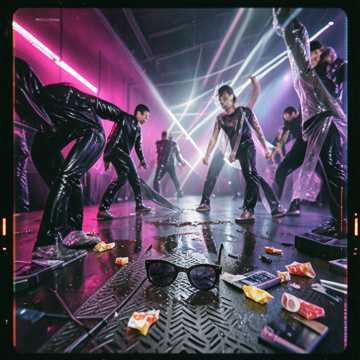
Groove Bimbo
Uma faixa de metal industrial dançante e provocante que retrata uma noite de festa, excesso e sedução por meio de vocais falados, refrões repetitivos, baixo distorcido, guitarras pesadas e efeitos eletrônicos agressivos.
05:57
Invalid date

Groove Dirty
Uma faixa explícita e provocante sobre uma noite de festa, sedução e excesso, conduzida por batidas pulsantes, vocais falados e refrões repetitivos. A estética mistura erotismo, humor transgressor e agressividade sonora, com guitarras industriais, baixo saturado e eletrônica glitch.
05:28
Invalid date

Groove Dirty
An aggressively provocative adult track that fuses industrial metal, progressive technopunk, and electronic glitches with seductive spoken passages. Its repetitive, high-energy structure creates a dark nightclub atmosphere centered on erotic provocation, mechanical rhythm, and exaggerated vocal performance.
04:57
Invalid date
Glitch Electronics: Definition, History, and Essential Characteristics
Glitch Electronics is a genre and production approach centered on manipulated digital errors, fragmented rhythms, corrupted samples, electronic noise, and precisely edited micro-sounds. Instead of treating clicks, skips, distortion, data errors, silence, and broken signals as unwanted defects, Glitch Electronics uses them as musical materials. Producers commonly work with short samples, granular synthesis, digital signal processing, circuit-bent instruments, software errors, nontraditional percussion, and detailed studio editing to create music that can sound mechanical, abstract, futuristic, or unexpectedly organic. Glitch Electronics is closely related to glitch music, IDM, microsound, experimental electronic music, breakcore, electronica, and electroacoustic composition, although it is not limited to one tempo, mood, or production method. The history of Glitch Electronics can be traced to experimental tape music, musique concrete, computer music, and early electronic composition, where composers manually cut, rearranged, filtered, and transformed recorded sound. During the1980s and1990s, affordable samplers, digital audio workstations, home computers, and advanced effects processors made precise manipulation of small sound fragments more accessible. The German label Mille Plateaux played a major role in popularizing the term glitch through its influential Clicks & Cuts compilations and related releases in the late1990s and early2000s. Artists such as Oval, Autechre, Aphex Twin, Pan Sonic, Alva Noto, and Fennesz helped establish different sides of the Glitch Electronics aesthetic, from rhythmic digital fragmentation to minimal clicks, harsh noise, and emotional sound processing. In the modern era, Glitch Electronics appears in underground electronic music, experimental pop, sound art, audiovisual installations, video games, film scoring, advertising, and technology-focused media. Contemporary producers often combine glitch techniques with ambient music, techno, hip-hop, dubstep, trap, cinematic sound design, and generative composition. The defining idea of Glitch Electronics is the creative transformation of malfunction, interruption, and digital imperfection into an intentional musical language.
Glitch Electronics Sub-Tags and Classifications
Clicks and Cuts
Clicks and Cuts is one of the most recognizable classifications within Glitch Electronics. It focuses on tiny clicks, pops, skips, digital fragments, chopped percussion, and short bursts of silence arranged with extreme precision. Tracks in this style may have minimal melodies and sparse structures, allowing the texture and timing of each micro-sound to become the central musical event. The style became strongly associated with late-1990s and early-2000s experimental electronica, especially through the Mille Plateaux label. Clicks and Cuts can feel quiet and intimate, but it can also create complex rhythmic patterns through the rapid repetition of extremely short samples.
IDM and Glitch Rhythms
IDM-oriented Glitch Electronics combines broken beats, irregular drum programming, syncopation, and intricate digital editing with synthesizer melodies and evolving harmonies. Instead of following a straightforward dance-floor pattern, IDM glitch rhythms often use abrupt changes, asymmetrical meters, polyrhythms, and constantly shifting percussion. Producers may rearrange breakbeats into rapidly changing sequences, apply granular effects to drum hits, or use automation to make a rhythm fragment, stutter, reverse, and rebuild. This classification is associated with detailed headphone listening as well as experimental club performance.
Microsound and Minimal Glitch
Microsound and Minimal Glitch explore sounds that are shorter than conventional musical notes, sometimes lasting only a few milliseconds. These pieces may be built from isolated clicks, digital grains, low-level noise, tiny tonal shifts, and carefully placed silences. The music often has a restrained tempo or no obvious beat, emphasizing space, texture, acoustic perspective, and subtle variation. Minimal Glitch Electronics in this category can overlap with sound art, contemporary composition, ambient music, and electroacoustic experimentation.
Glitch Ambient
Glitch Ambient combines the spacious atmosphere of ambient music with corrupted samples, granular processing, digital crackle, and unstable electronic textures. Long drones and soft harmonic fields may be interrupted by clicks, data-like artifacts, or decaying fragments. The result can be meditative, melancholic, cinematic, or futuristic rather than aggressive. Glitch Ambient is frequently used in installations, science-fiction media, contemplative games, visual art, and background listening because it creates a sense of depth without requiring a constant rhythmic pulse.
Circuit-Bent Electronics
Circuit-bent electronics use modified toys, keyboards, drum machines, radios, and other electronic devices to produce unpredictable sounds. Artists intentionally alter circuits or connect components in unusual ways, creating unstable pitches, feedback, voltage fluctuations, rhythmic errors, and harsh digital tones. Circuit bending gives Glitch Electronics a physical and handmade character. Unlike purely software-based glitch production, it emphasizes the behavior of real hardware and the musical possibilities of accidental interaction.
Digital Noise and Data Glitch
Digital Noise and Data Glitch emphasize distortion, bit reduction, clipping, corrupted files, harsh frequency bands, modem-like sounds, static, and simulated transmission errors. The style can be abrasive and confrontational, drawing on noise music, industrial electronics, and experimental sound design. Some producers intentionally damage audio files or manipulate binary data to produce unusual sonic artifacts, while others recreate these effects with bit crushers, sample-rate reduction, spectral processing, and digital distortion plugins.
Glitch Breaks and Breakcore
Glitch Breaks and Breakcore use heavily edited breakbeats, rapid drum changes, extreme tempo shifts, stutters, reversals, and dense rhythmic collisions. This classification is more energetic than minimal glitch and often has a strong connection to rave, jungle, drum and bass, and hardcore techno. Glitch techniques are applied to every part of the rhythm, including kick drums, snares, hi-hats, and sampled breaks. The result is fast, volatile, and highly detailed electronic music that rewards close listening.
Glitch Techno and Minimal Techno
Glitch Techno applies digital fragmentation to a steady techno framework. A four-on-the-floor kick or repeating bass pattern may be joined by chopped percussion, malfunctioning synth loops, unstable effects, and short rhythmic interruptions. The consistent pulse preserves dance-floor functionality while the glitch processing adds tension, movement, and mechanical detail. This approach is common in underground club music, audiovisual performances, and technology-oriented electronic compositions.
Granular and Spectral Glitch
Granular and Spectral Glitch use advanced digital processing to divide sound into grains or manipulate individual frequency components. A vocal, instrument, field recording, or synthesizer phrase can be stretched, frozen, scattered, pitch-shifted, and reorganized into a new sonic structure. Granular processing produces clouds, swarms, and shimmering fragments, while spectral processing can isolate or transform particular frequencies. This classification is especially useful for creating abstract atmospheres, evolving textures, and sound-design effects.
Glitch Pop and Experimental Electronica
Glitch Pop brings Glitch Electronics techniques into a more accessible song format. Vocals, hooks, synthesizers, and conventional verses may be interrupted by stutters, chopped syllables, pitch errors, digital distortion, and abrupt edits. The production keeps the unusual texture of glitch music while retaining memorable melodies and a recognizable pop structure. This approach has influenced electronic pop, hyperpop, alternative R&B, experimental hip-hop, and contemporary commercial sound design.
Famous Glitch Electronics Artists and Related Works
Oval
German artist Markus Popp, known as Oval, is one of the key figures in the development of Glitch Electronics and the broader glitch music movement. His early work used damaged compact discs, skipping samples, and irregular playback behavior as compositional tools. Albums such as Wohnton and94diskont. demonstrated how digital errors could become melodic, rhythmic, and atmospheric materials rather than simple effects. Oval's contribution helped define the idea that a malfunctioning playback system could act as a musical instrument.
Oval -94diskont.
94diskont. is a landmark in Glitch Electronics because it treats compact-disc skipping and playback errors as compositional structures. Instead of hiding damaged audio behavior, Oval organizes repetition, interruption, and fragmented loops into pieces that can feel melodic and ambient. The work is innovative because the error is not added as a decorative effect after composition; it becomes the source of rhythm, form, and timbre. Its restrained pacing and hazy texture also helped establish a softer, more atmospheric side of glitch music.
Autechre
The British electronic duo Autechre have made major contributions to IDM, algorithmic composition, abstract techno, and Glitch Electronics. Albums including Tri Repetae, LP5, Confield, and Untilted feature complex programming, unstable rhythms, synthetic percussion, unusual spatial effects, and machine-like sound design. Their work shows how glitch techniques can be integrated into large-scale compositions with intricate structures, evolving timbres, and mathematical rhythmic relationships.
Autechre - Confield
Confield is a demanding and influential example of abstract IDM and Glitch Electronics. Its tracks use irregular rhythms, synthetic percussion, abrupt edits, unstable tonal material, and complex patterns that seem to evolve according to algorithmic rules. The album challenges the expectation that electronic music must maintain a predictable groove. Its innovation lies in creating movement from systems that feel partially automated, while still preserving a strong sense of detailed sound design and deliberate arrangement.
Aphex Twin
Richard D. James, performing primarily as Aphex Twin, helped bring experimental electronic production to a wider audience. Releases such as Selected Ambient Works85-92, ...I Care Because You Do, Richard D. James Album, and Drukqs move between ambient electronics, breakbeats, melodic composition, distorted percussion, and highly edited digital fragments. His contribution to Glitch Electronics lies in combining technical sound manipulation with strong melody, emotional contrast, humor, and unpredictable rhythmic design.
Aphex Twin - Drukqs
Drukqs combines rapidly edited electronic tracks, broken rhythms, distorted samples, intricate programming, and delicate prepared-piano pieces. The contrast between acoustic piano and hyperactive digital percussion reveals the wide expressive range of Glitch Electronics. Many tracks use abrupt transitions, stutters, compressed textures, and unexpected rhythmic shifts, but the album also contains fragile melodies and quiet spaces. Its importance comes from demonstrating that glitch production can be technically complex without losing emotional or instrumental character.
Alva Noto
Alva Noto, the alias of German artist Carsten Nicolai, is known for minimal electronic music built from clicks, pulses, sine tones, static, and carefully controlled digital textures. Albums such as Transform, Xerrox, and Unitxt explore the relationship between sound, data, architecture, and visual design. His work demonstrates a highly precise form of Glitch Electronics in which small sonic events, silence, stereo placement, and repetition create a clean but emotionally resonant sound world.
Alva Noto - Xerrox Vol.1
Xerrox Vol.1 transforms ideas associated with copying, digital transfer, and signal degradation into spacious ambient compositions. Alva Noto uses filtered tones, soft interference, restrained pulses, and subtle digital artifacts to create a clean yet imperfect sonic environment. The innovation is primarily in its control of micro-detail and space: small changes in texture and frequency become structurally important. The album represents a reflective and cinematic branch of Glitch Electronics.
Fennesz
Austrian guitarist and producer Christian Fennesz combines processed guitar, digital noise, ambient harmony, and dense electronic textures. His album Endless Summer is particularly important because it merges the warmth of guitar and melody with crackling distortion, broken digital surfaces, and layered sonic deterioration. Fennesz expanded the emotional range of Glitch Electronics, showing that digital artifacts could support beauty, nostalgia, and lyrical atmosphere rather than only mechanical abstraction.
Fennesz - Endless Summer
Endless Summer combines processed electric guitar with digital crackle, layered distortion, ambient harmony, and fragmented electronic textures. Rather than presenting glitch as a cold technical process, Fennesz uses it to blur memories of acoustic performance and digital deterioration. The album's innovation lies in its fusion of melodic songwriting, noise, and computer-based processing. It remains an important example of how Glitch Electronics can be warm, expressive, and emotionally direct.
Pan Sonic
The Finnish group Pan Sonic, originally associated with the name Panasonic, developed a powerful style based on analog electronics, low-frequency pulses, severe minimalism, noise, and industrial repetition. Their music, including the album Kulma, connects Glitch Electronics with experimental techno, sound art, and industrial electronics. Pan Sonic's contribution is especially notable for demonstrating how a very limited palette of electronic tones can produce physical intensity and architectural structure.
Ryoji Ikeda - Dataplex
Dataplex explores the sound of information through sharp pulses, high frequencies, clicks, digital noise, and tightly controlled repetition. The work often feels like an encounter with a large-scale computational system, yet its carefully arranged patterns create a clear musical logic. Its importance to Glitch Electronics comes from treating data behavior and digital precision as the primary subject of composition. It also demonstrates how glitch sound can function across music, installation art, and synchronized visual performance.
Mille Plateaux
Mille Plateaux is a German record label rather than an individual artist, but it played a decisive role in the history of Glitch Electronics. Its Clicks & Cuts compilation series brought together artists working with microscopic edits, digital errors, minimal rhythms, and experimental computer music. The label helped establish a shared vocabulary for glitch music and made the aesthetic visible as a distinct field within late-1990s electronic culture.
Mille Plateaux - Clicks & Cuts
The Clicks & Cuts compilation series is a defining document of the early glitch music movement. It presents multiple approaches to micro-edits, skipping sounds, chopped percussion, digital silence, and minimal electronic composition. Rather than representing one artist's style, the series shows how a common production vocabulary can support ambient, rhythmic, abstract, and experimental tracks. Its broader innovation was cultural as well as musical: it gave Glitch Electronics a recognizable community, terminology, and international platform.
Ryoji Ikeda
Japanese artist Ryoji Ikeda works across electronic music, installation, data art, and audiovisual performance. His compositions use high-frequency tones, pulses, clicks, noise, binary-like sequences, and extreme dynamic contrasts. Works such as dataplex and test pattern explore the aesthetic of information and machine processing. Ikeda's contribution to Glitch Electronics is connected to the transformation of data, measurement, and digital precision into immersive musical and visual experiences.
Matmos
The American experimental duo Matmos use sampling, unusual recording techniques, acoustic objects, electronics, and detailed editing to create conceptually driven compositions. Their album A Chance to Cut Is a Chance to Cure is especially relevant to glitch-oriented production because it combines medical sounds, electronic processing, rhythmic fragmentation, and playful studio manipulation. Matmos demonstrate how Glitch Electronics can incorporate narrative ideas, physical sound sources, and unconventional performance practices.
Glitch Electronics Application Scenarios
Glitch Electronics is effective in science-fiction, cyberpunk, psychological thriller, documentary, and technology-focused film because its fragmented textures can suggest computer systems, surveillance, data corruption, unstable memory, or an altered mental state. Subtle clicks and low-level digital noise can build tension without overwhelming dialogue, while aggressive glitch rhythms can support chase sequences, digital transitions, and scenes involving machines or network failures. Ambient glitch is also useful for creating a modern sense of isolation and technological unease.
Film and Television Soundtracks
Technology companies, software platforms, automotive brands, fashion campaigns, and telecommunications businesses often use Glitch Electronics to communicate innovation, speed, precision, and digital sophistication. A short glitch sound logo can be built from clicks, pulses, chopped vocal fragments, or a brief data-like burst. In advertising music, carefully controlled digital edits can synchronize with product animations, interface transitions, rapid cuts, and kinetic typography. The production should remain clear and memorable so that the glitch effect supports the brand rather than distracting from the message.
Advertising and Brand Identity
Glitch Electronics is well suited to cyberpunk games, puzzle games, roguelikes, hacking sequences, abstract platformers, horror games, and futuristic science-fiction environments. Broken rhythms can reflect procedural worlds or unpredictable gameplay, while granular textures can make a game area feel digital, unstable, or alien. Adaptive game audio can also use glitch layers that become denser when a player enters danger, activates a machine, solves a puzzle, or encounters corrupted data. Minimal glitch is useful for exploration, whereas glitch breaks and distorted electronics can intensify combat or high-speed action.
Video Game Background Music
Short Glitch Electronics cues work well in trailers because they create immediate contrast and can mark edits with precise sonic impacts. Stutters, reversed fragments, digital drops, and sudden silence can increase anticipation before a title reveal or visual transition. A producer can combine a stable pulse with increasingly fragmented layers so that the music grows more urgent alongside the trailer's narrative structure.
Film Trailers and Promotional Videos
Glitch Electronics is frequently used in galleries, museums, projection mapping, generative art, and interactive installations. Sensors or visitor movements can control granular synthesis, sample fragmentation, volume, frequency, or rhythmic density, allowing the sound to react to the audience. The genre's interest in errors and systems makes it particularly suitable for artworks about data, technology, surveillance, machine behavior, digital identity, and the instability of recorded information.
Interactive Installations and Digital Art
Short glitch effects can distinguish transitions, chapter changes, notifications, loading states, and interface interactions in podcasts, online videos, apps, and digital products. Minimal clicks and pulses can make an interface feel responsive and contemporary, while carefully designed data errors can signal an interruption or technical problem. For usability, these sounds should have controlled loudness, a clear frequency range, and enough variation to prevent listener fatigue.
Podcasts, Videos, and User Interface Sound Design
Live performers use Glitch Electronics to create responsive sets in which samples, drum machines, modular synthesizers, effects, and visual systems interact in real time. Performers may use loopers, MIDI controllers, granular processors, circuit-bent hardware, or custom software to break and rebuild rhythmic material during a performance. When synchronized with projected graphics, glitch music can create a unified audiovisual language based on scanning, fragmentation, pixelation, and data motion.
Live Electronic Performance and Audiovisual Shows
Glitch Electronics can support runway shows, contemporary dance, theater, and performance art by emphasizing mechanical movement, repetition, interruption, and bodily interaction with technology. A steady electronic pulse can coordinate movement, while abrupt edits and unstable textures can represent tension, transformation, or fractured identity. The music is especially useful when choreography or stage design includes screens, robotics, sensors, or projected digital imagery.
Fashion, Dance, and Contemporary Performance
Low-intensity Glitch Ambient can provide an unobtrusive background for documentaries and podcasts about science, computing, internet culture, digital art, or social technology. Sparse clicks, soft processed noise, and evolving electronic tones add contemporary character while leaving room for narration. The most effective underscore uses restrained dynamics and limited high-frequency activity so that speech remains intelligible.
Podcast and Documentary Underscore
Glitch Electronics is a natural fit for generative music systems because its sound can be produced from rules, random processes, feedback networks, probability, and data streams. A program can determine when samples are chopped, repeated, reversed, filtered, or spatialized, creating pieces that evolve differently during every performance. This application connects Glitch Electronics with algorithmic composition, artificial intelligence experiments, data sonification, and interactive software.
Creative Coding and Generative Music